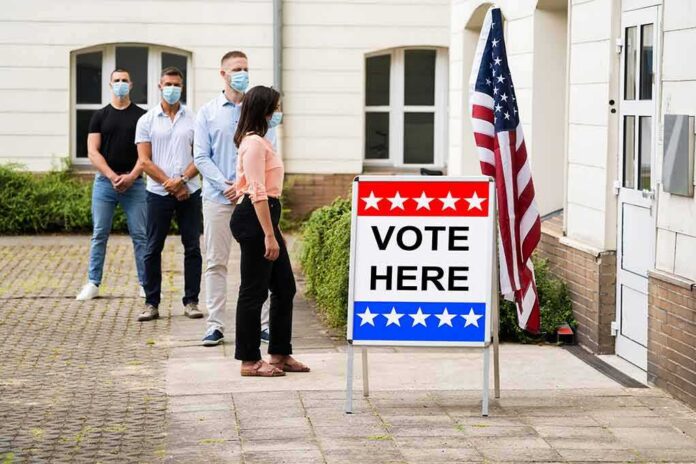
Florida election officials moved flooded polling places on Election Day so voting could go on.
Story Snapshot
- A state emergency order let county supervisors switch unsafe polling sites.
- Officials posted a county-by-county table of temporary locations and addresses.
- At least 18 sites moved across seven counties after heavy rain and flash floods.
- Some roads were fully submerged; safety drove several changes, officials said.
Emergency authorization cleared the path to move polling places
Governor Ron DeSantis issued an emergency declaration for flooding that covered several Florida counties and threatened access to polling sites. The order empowered local supervisors of elections to redirect voting when sites were unsafe or could not be reached because of blocked roads. The Florida Department of State followed with a public resource page. It listed the original sites, the replacement locations, the precinct numbers, and clear street addresses to guide voters on short notice.
County officials used the authority to keep voting open despite washed-out routes. Today reported that at least 18 polling locations moved across Brevard, Highlands, Indian River, Martin, Okeechobee, Palm Beach, and St. Lucie counties after heavy rain and flash flooding. The Washington Post reported that the Secretary of State’s office published a consolidated list “to ensure that residents in those areas in affected counties still have the ability to vote,” underscoring the aim to preserve access during the storm.
Flooded roads, safety risks, and rapid county action
Brevard County’s elections supervisor, Tim Bobanic, said five polling places there were not accessible because the roads leading to them were completely submerged. He linked the relocations to inclement weather and the safety and security of election workers, which also protects voters who must travel those routes. When roads trap cars and emergency crews, moving the vote a few miles can be the difference between a ballot cast and a ballot lost. That is the core job of emergency election planning.
Local lists show how operations shifted in practice. In St. Lucie County, multiple precincts consolidated at larger, reachable halls, including moves to the Havert L. Fenn Center and Port St. Lucie Community Center. Other sites shifted from smaller lodges to hotels with dry parking and open access. The state’s table shows similar swaps in Brevard, such as the Max K. Rodes Park Community Center and a college campus site moving to churches and libraries that were open and dry. These choices favored facilities with parking, power, and room to handle combined precincts.
How many sites moved and what that means for voters
Newsrooms tallied the scope as updates rolled in. One count put the number at least 18 locations across seven counties. Another public radio report described 21 original sites across eight counties where buildings were damaged or roads were unsafe, with alternatives set up nearby. The Washington Post said more than 20 sites moved statewide. The exact total varied by report time and counting method, but the through-line stayed the same: flooded routes forced quick shifts to keep the doors open.
Flooding Forces Polling Place Changes in 8 Florida Counties on Election Day ⚠️
Voters in Brevard, Broward, Highlands, Indian River, Martin, Okeechobee, Palm Beach and St. Lucie counties may have new polling locations today due to flooding. Before heading out to vote, check with…
— Citizen (@CitizenApp) November 3, 2026
Research on polling-place changes shows why speed and clarity matter. Even small added distance or search time can push some voters away from in-person voting. Studies find that moving a polling site can reduce same-day turnout, mainly through extra travel and confusion costs. That is why supervisors posted clear addresses, grouped precincts at high-capacity sites, and repeated the message to check one’s location before leaving home. That is common sense, and it aligns with conservative principles of order, safety, and keeping the vote running on time.
What to watch next: access, notice, and performance
Officials framed the relocations as a way to maintain voting during severe flooding, and the public listings back that up. The next test is execution. Counties will review turnout, provisional ballots, line lengths, and incident logs to gauge how well the plan worked. The goal is simple: when nature floods the map, government must move fast and tell people exactly where to go. Florida’s emergency framework gave local leaders that tool, and they used it to keep ballots moving despite high water.
Sources:
facebook.com, dos.fl.gov, today.com, cbsnews.com, politico.com, wptv.com, fox35orlando.com, washingtonpost.com, dl.acm.org
© partiallypolitics.com 2026. All rights reserved.