Two Iranian drones slipped through Saudi Arabia’s air defenses and struck the United States Embassy in Riyadh, igniting fires across the diplomatic compound and exposing a critical vulnerability in one of America’s most important Middle Eastern alliances.
Story Snapshot
- Iranian drones successfully penetrated Saudi air defenses to strike the U.S. Embassy in Riyadh overnight on March 3, 2026, causing fires and damage with no reported injuries
- The attack represents Iranian retaliation for a joint U.S.-Israel offensive that killed Ayatollah Khamenei and 49 other Iranian leaders
- The State Department ordered American evacuations from 14 Middle Eastern countries as regional conflict escalates across multiple fronts
- Concurrent Israeli strikes in Lebanon killed 52 and wounded 154 as coordinated U.S.-Israel operations target Iranian-backed forces
- Previous Iranian drone attempts on Riyadh were intercepted, raising questions about what changed to allow this successful strike
When Defense Systems Fail at the Worst Possible Moment
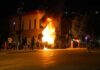
The embassy compound sat relatively empty when the drones struck, a fortunate circumstance that prevented what could have been a diplomatic massacre. Video footage circulated on social media showed flames dancing outside the compound walls before official reports confirmed the attack. Police swarmed the area as fires burned, while diplomatic personnel faced the uncomfortable reality that billions spent on Saudi air defense systems had just proven inadequate when it mattered most. The Saudis had successfully intercepted previous Iranian drone attempts targeting Riyadh, making this penetration all the more alarming for American security planners.
The timing tells the real story. This strike came as direct payback for American and Israeli operations that decapitated Iranian leadership. Intelligence sources confirmed that the U.S. strike caught Ayatollah Khamenei above ground, meeting with top officials in his office. The Iranian supreme leader died alongside 49 other leaders in what Secretary of State Marco Rubio characterized as defensive action against imminent threats. Iran’s response targeted not just military installations but the very symbol of American diplomatic presence in the heart of Saudi Arabia’s capital, sending an unmistakable message about their willingness to escalate.
The Pattern Behind the Penetration
Iranian drone tactics have evolved beyond simple aerial attacks. The Rastanura oil facility in Saudi Arabia suffered damage from shrapnel when intercepted drones were destroyed overhead, revealing a calculated strategy to overwhelm defense systems. Each interception creates debris that still causes damage, forcing Saudi operators into impossible choices about when and where to engage incoming threats. The successful Riyadh embassy strike suggests Iranian operators have identified gaps in coverage or timing windows when defenses are vulnerable. This represents either a quantum leap in Iranian capabilities or a disturbing degradation of Saudi defensive readiness.
The broader conflict now spans multiple theaters with deadly efficiency. Israeli forces struck Hezbollah command centers in Beirut simultaneously with the embassy attack, killing 52 and wounding 154 in operations that displaced thousands of Lebanese civilians near the Israeli border. The coordination between American and Israeli military actions suggests planning far beyond reactive strikes. President Trump formally notified Congress of the military situation as major airlines canceled flights throughout the region. The U.S. began targeting Iranian embassies and airports, including facilities in Dubai, marking a dramatic expansion of the conflict zone beyond traditional battle spaces.
Evacuation Orders and Empty Skies
The State Department’s evacuation order covering 14 Middle Eastern countries represents an extraordinary assessment of regional threat levels. American citizens received instructions to depart by commercial transportation while flights remained available, a window that closed rapidly as airlines suspended service. The mass exodus of diplomatic personnel and American civilians signals official recognition that this conflict has entered unpredictable territory where embassies themselves become legitimate targets in Iranian strategic thinking. The financial and logistical costs of such widespread evacuations pale beside the diplomatic implications of abandoning established positions across an entire region.
Energy markets face renewed instability as attacks target oil infrastructure alongside diplomatic and military sites. The Rastanura facility damage, though caused by interception debris rather than direct hits, demonstrates how even defensive actions create economic consequences when fighting occurs near critical energy installations. Saudi Arabia’s role as American ally and OPEC heavyweight places its infrastructure at the center of conflicting interests. Any sustained disruption to Gulf oil production would ripple through global markets, potentially driving prices upward and creating economic pressure that extends the conflict’s impact far beyond the immediate combat zones.
Defense Architecture Under Question
The successful embassy strike forces uncomfortable questions about billions invested in Saudi air defense systems. American taxpayers have funded extensive military sales to Saudi Arabia specifically to create a defensive bulwark against Iranian aggression. Those systems intercepted previous attempts but failed when Iranian drones reached the American embassy compound. Whether this reflects improved Iranian technology, intelligence about Saudi defensive gaps, or simple statistical inevitability when facing sustained drone campaigns remains unclear. What is clear is that static defenses struggle against adaptive adversaries willing to sacrifice multiple drones to achieve single successful strikes.
The path forward requires reassessment of both military strategy and diplomatic positioning. Secretary Rubio’s characterization of American actions as defensive acknowledges the administration’s view that preemptive strikes against imminent threats constitute legitimate self-defense rather than aggression. This interpretation matters greatly for legal and diplomatic frameworks governing the conflict. Iranian willingness to strike diplomatic facilities suggests they view such targets as legitimate given the scope of American operations against their leadership. The cycle of escalation now includes both military and diplomatic targets across multiple countries, creating complexity that defies easy resolution through either force or negotiation alone.
Sources:
U.S Embassy Attacked in Saudi Arabia