
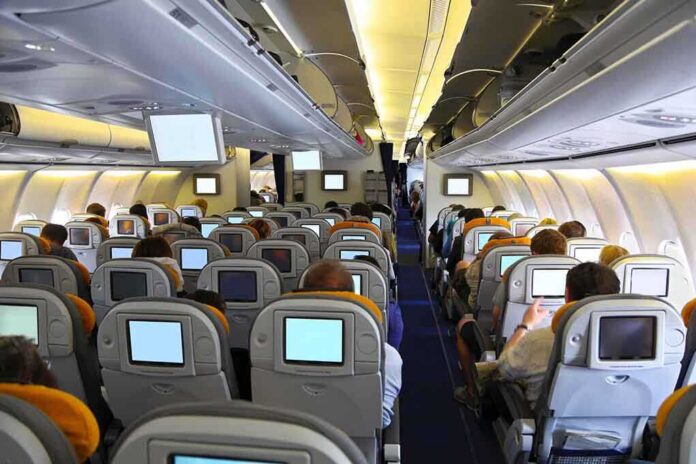
Southwest didn’t just change where you sit—it yanked out the one small ritual that made loyal flyers feel in control.
Story Snapshot
- Southwest launched assigned seating on January 27, 2026, ending its decades-long open-seating identity.
- Early backlash centered on seat-number confusion, boarding slowdowns, and passengers getting stuck when flights weren’t full.
- New “premium” seat options sharpened the suspicion that the change targets revenue more than comfort.
- Leadership responded with promises of refinements, not a return to open seating.
Why This Change Hit a Nerve: Open Seating Was Southwest’s Social Contract
Open seating wasn’t just a boarding method; it was Southwest’s handshake with the public. You accepted lining up and hustling onboard, and in return you got choice, flexibility, and a sense the rules applied evenly. Assigned seating broke that deal overnight. Passengers who built routines around checking in, boarding early, and scanning for the best “good enough” spot suddenly faced seat maps, numbers, and the modern airline habit of charging more for space.
The emotional punch came from whiplash. Other airlines trained customers to pick seats years ago, but Southwest’s brand trained people to self-organize. That difference matters because habits reduce stress, especially for older travelers, families, and frequent flyers who fly on muscle memory. When the system changed, many didn’t just feel inconvenienced—they felt tricked, like a hometown diner quietly swapped its menu for airport food prices.
What Passengers Reported: Confusion, Seat Disputes, and “No, You Can’t Swap”
Complaints piled up fast, especially on Reddit and X, and the themes stayed consistent: passengers sitting in the wrong place, others insisting they were “assigned” a seat that didn’t match the boarding pass, and gate-to-cabin friction as crew tried to keep the line moving. Under open seating, small disputes dissolved because another seat always existed. Under assignments, the wrong seat turns into a mini property dispute at 30,000 feet.
One detail that inflamed the situation: stories of passengers being told they couldn’t move even when the plane looked underfilled, sometimes with “weight and balance” offered as the reason. Sometimes weight balance is legitimate; airlines do manage distribution. But the public hears that phrase the way drivers hear “computer says no.” A policy that removes flexibility has to replace it with clarity, or people assume the rule exists only when it’s convenient.
The Money Question: Assigned Seating Is Also a Pricing System
Southwest didn’t step into assigned seating as a neutral change. Assigned seating creates a clean pathway to charge for “better” placement—extra legroom, preferred rows, and other premium options that used to be unavailable or irrelevant in the open-seating scramble. That’s why the backlash doesn’t read like mere nostalgia. Many passengers see the shift as a transfer of value: what you once earned through planning now gets sold back to you.
From a conservative, common-sense standpoint, a company has the right to set its prices and product. Customers also have the right to walk. The real issue is transparency and competence. If Southwest wants to sell premium space, it needs a system that works reliably and doesn’t turn every boarding into a customer-service negotiation. People will tolerate paying for upgrades; they won’t tolerate paying and still getting chaos.
Southwest’s Response: Refinements, Not a Rollback
By February 2026, Southwest leadership signaled it heard the noise and planned adjustments rather than retreat. The stated direction focused on operational fixes—things like assigned boarding groups, better access to overhead bins, and faster deplaning—while keeping the core assigned-seating framework. That posture tells you the change likely connects to financial goals that leadership considers non-negotiable, even if execution needs tightening.
The most credible defense of the shift is that assigned seating itself isn’t the villain; glitches and transition pain are. Travel expert commentary pointed to practical problems like seat reassignments and inconsistent maps as the accelerant. That rings true: plenty of airlines use assignments without melting down daily. Southwest’s unique challenge is that it’s trying to land a new operating model on customers who were trained for the old one—and on frontline employees who have to enforce it.
What Happens Next: Loyalty Gets Measured in Bookings, Not Comments
Social media storms feel like the whole country is furious, but the scoreboard is revenue and repeat business. Southwest will watch whether frequent flyers actually defect and whether premium-seat fees offset the churn. The early warning sign isn’t just anger; it’s passengers saying they’re switching after years of loyalty. That’s the kind of claim companies dismiss at their peril, because habit is hard to rebuild once broken.
Passengers rip airline for new seating policy: 'It is as bad as everyone is saying' – Fox News https://t.co/DAOp0ELY50
— Airline Gossip (@airlinegossip) March 6, 2026
Assigned seating will probably survive, but Southwest still has to answer one question every legacy carrier already learned: what exactly does the customer get for what they pay? If the airline delivers simpler boarding, fewer seat squabbles, and reliable seat maps, complaints fade into background noise. If confusion persists, the brand loses what made it different—and “different” was the whole point of choosing Southwest in the first place.
Sources:
Passengers rip airline for new seating policy: ‘It is as bad as everyone is saying’
Southwest Updates New Seating Policy
Southwest Refining Assigned Seating Policy Following Customer Backlash
Southwest Airlines rule forces complaining
Customer Uproar Has Southwest Rethink Assigned Seating (Changing?)