A New Hampshire lawmaker says the state constitution shields her from speeding tickets, and the fight over that claim is about much more than a heavy foot on the gas pedal.
Story Snapshot
- Democrat Rep. Ellen Read wants two speeding cases thrown out by citing “legislative privilege.”
- She argues a centuries-old constitutional clause bars police from stopping her while traveling to or from the State House.
- Prosecutors say that protection was never meant to cover routine traffic enforcement or 100-mile-per-hour driving.
- The case spotlights a bigger question: do politicians live under the same laws as everyone else, or above them?
A lawmaker, a fast car, and a very old constitutional clause
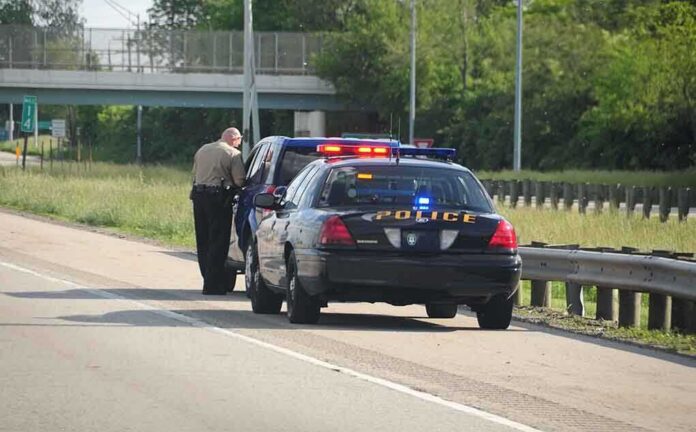
New Hampshire State Representative Ellen Read, a Democrat from Newmarket, is asking a court to dismiss two speeding cases by claiming special protection as a lawmaker. Court filings say deputies clocked her at 107 miles per hour in one case and 92 miles per hour in another, both on interstate highways with much lower limits. Read does not dispute the speed. Instead, she argues the New Hampshire Constitution blocked officers from stopping or charging her while she was in transit to legislative business.
🚨 **LAWMAKER PRIVILEGE GONE WILD** 🚨
New Hampshire State Rep. Ellen Read (D) got caught doing **107 mph** in a 65 zone… then **92 mph** again.
Her defense? The state Constitution gives her "legislative privilege" — she claims cops can't even pull her over while she's…
— Erik Bryant (@Trumpwon) July 15, 2026
Read bases her motion on a “freedom from arrest” concept that reaches back to 1784, when New Hampshire adopted its current constitution. Similar language appears in many state charters and in English law, meant to keep kings or local sheriffs from blocking lawmakers on their way to vote. Read’s filings say deputies “lacked authority” to detain her because she was a sitting representative on her way to the General Court, the state legislature. She insists this was not arrogance, but a defense of constitutional separation of powers.
What the New Hampshire Constitution actually says
Here is the core problem for Read’s argument: the clause she leans on does not mention speeding, tickets, or traffic stops at all. Part I, Article 37 of the New Hampshire Constitution speaks broadly about keeping the legislative, executive, and judicial powers “separate from, and independent of, each other.” Legal scholars explain that this separation was designed to stop one branch from controlling the other, not to excuse lawmakers from neutral laws like road speed limits.
Older state materials and court opinions describe legislative privilege as protection from arrest or civil lawsuits aimed at punishing or blocking legislative work. It was meant to guard against political harassment—like a governor ordering a sheriff to hold legislators in jail so they could not vote. Routine enforcement that applies to everyone, such as traffic laws, is normally treated as part of the executive branch’s role to enforce general laws, not as political interference.
Inside the courtroom fight over “legislative privilege”
Prosecutor James Sweeney, handling one of Read’s cases, draws a clear line: legislative privilege exists to make sure lawmakers can do their jobs, not to let them avoid the results of speeding. He argues that when deputies stop a car going over 100 miles per hour, they act to protect public safety, not to meddle in lawmaking. That view fits long-standing American conservative values of equal treatment under the law and limited special perks for political insiders.
The New Hampshire Supreme Court has already signaled doubt. In June, the court declined to hear Read’s appeal at this early stage, letting the lower court process play out instead. That move does not settle the issue, but it shows the state’s highest judges are not eager to expand legislative privilege into the traffic realm. Past New Hampshire decisions have been cautious about stretching constitutional protections beyond their original purpose, especially where public safety and basic enforcement powers are at stake.
Speeding, perception, and the politics of privilege
Media coverage has not been kind to Read. Headlines call her “entitled” and highlight the 107-mile-per-hour figure, along with video segments suggesting she told deputies “laws do not apply to her.” Social media accounts tied to Republican groups have turned “Team Legislative Privilege” into a punchline, casting the case as proof that Democratic politicians think rules are for other people. For voters who already suspect elites play by a different set of rules, this story feels like confirmation.
NH State Rep. Ellen Read joined Dan after she was clocked driving 107 mph & invoked legislative privilege during the traffic stop. The case has sparked debate over whether that protection applies to speeding violations.https://t.co/uV5kFGYQTZ pic.twitter.com/R0KMMkUseT
— Dan Rea (@WBZNightside) July 15, 2026
From a common sense and conservative angle, the facts cut against Read. Ordinary drivers who hit 100 miles per hour cannot wave a copy of the constitution and drive away. They face fines, points, and sometimes loss of license. When a lawmaker claims the same constitution gives her a shield from that reality, it looks less like principled defense of legislative independence and more like an attempt to turn a serious safety law into a personal loophole.
Why this strange case matters beyond one lawmaker
Read’s challenge fits a broader pattern. Around the country, lawmakers sometimes test old “freedom from arrest” clauses against modern rules, especially traffic laws, and almost always lose. Courts usually say what matters is whether enforcement actually blocks legislative duties. A brief stop, a ticket, or even an arrest for clear criminal behavior rarely qualifies. In plain terms, judges tend to ask: is this about politics, or about someone breaking a normal law that applies to everyone?
The coming hearing on Read’s motion could create fresh state precedent. If the judge rules that legislative privilege does not reach traffic stops, it will reinforce a simple idea: public office does not include a fast lane above the law. If the court surprises everyone and sides with Read, expect swift backlash and calls to amend the constitution. For now, the odds—and the history of similar cases—favor prosecutors and the principle that lawmakers should follow the same speed limits as the rest of us.
Sources:
facebook.com, sites.camden.rutgers.edu, bostonglobe.com, law.justia.com, reddit.com, gc.nh.gov, mclane.com
© partiallypolitics.com 2026. All rights reserved.