Six silent metal orbs rolled out of the Coral Sea and onto an Australian beach, and with them came a blunt warning about what really falls out of the sky in the age of rockets and rising space junk.
Story Snapshot
- Six large metal spheres on Forrest Beach in Queensland are identified as rocket “space balls,” not alien artifacts.
- Australian Space Agency experts say they are pressure vessels from a foreign rocket that fell back to Earth.
- Authorities set exclusion zones because leftover rocket fuel can be toxic or even explosive.
- The case fits a growing pattern: Australia is becoming a dumping ground for other nations’ space hardware.
Mysterious metal spheres and a fast answer from space officials
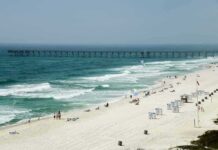
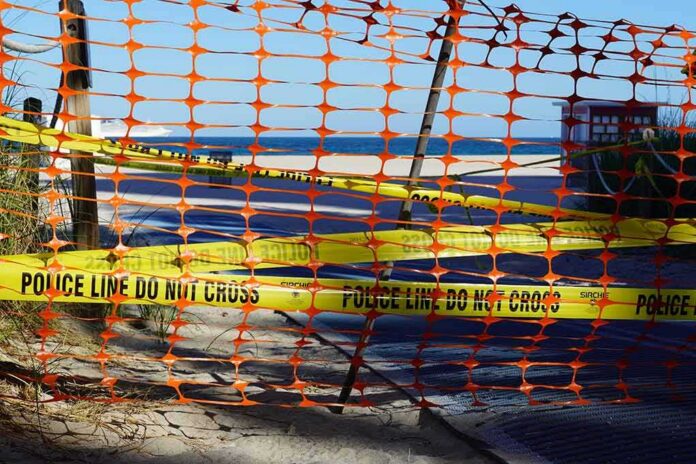
Families walked Forrest Beach in northern Queensland expecting shells and driftwood, not six hard metal spheres that looked like props from a science fiction movie. The objects appeared over a weekend, scattered along the sand near the small community of Forrest Beach, north of Townsville, and people did what they always do now: snapped photos, posted them, and started guessing aliens. Within a day, police taped off the area and called in the Australian Space Agency to take over.
The Australian Space Agency did not tease the public with mystery. On social media and in public statements, it said the spheres “appear to be pressure vessels from a space launch vehicle” and that their “location and characteristics” matched debris from a foreign rocket body that had recently re-entered the atmosphere. In plain terms, these were parts of a rocket, not messages from another world. That fast, clear answer matters in an online culture that jumps straight to conspiracy.
What “space balls” really are and why experts took them seriously
Reporters and locals started calling the objects “space balls,” a goofy nickname for a very serious piece of hardware. Space archaeologists and astrophysicists who saw images said they matched pressurized fuel or gas tanks that rockets drop or shed on their way to orbit. These spherical vessels are built from tough metals such as titanium so they can survive intense pressure and heat, which also makes them more likely to endure a fiery re-entry and land intact on Earth.
Experts pointed out that what you cannot see is more dangerous than what you can. Some pressure vessels can hold hydrazine, a rocket propellant that is both toxic and potentially explosive if any residue remains. Because of that risk, Queensland authorities set up a 50-metre exclusion zone, called in hazardous materials crews, and moved the orbs in sealed drums. Police later said there was no ongoing threat to the community, but they still told people: if you ever find suspected space junk, do not touch it, call the authorities.
From Queensland beach to foreign rocket: how investigators connect the dots
The agency went beyond a simple guess. Its statement said it had “identified the likely source” of the debris and was working with international partners to confirm which launch vehicle and which country the rocket came from. That process relies on orbital catalogs and re-entry tracking. When space junk falls, United States and European tracking networks usually know which rocket bodies decayed over which region, and when. Australia cross-checks that data with the timing and location of the beach find.
Independent experts layered on their own educated guesses. A professor from the University of Warwick said the spheres “clearly” looked like hydrazine tanks from a launch vehicle, and suggested they were likely from Indian or Chinese hardware based on design features and recent launch activity. A space archaeologist in Australia floated the idea that they might match a Russian Fregat upper stage, again stressing that this was speculation until foreign agencies confirmed it. The key point: every informed voice lined up on the same basic conclusion. These are rocket parts, not a hoax and not a cover story.
Why this one beach story exposes a bigger space junk problem
This was not a freak one-off event. In recent years, Australia has seen debris from a SpaceX Dragon capsule in the Snowy Mountains, a large metal cylinder from an Indian Polar Satellite Launch Vehicle on a Western Australian beach, and smoldering fragments in the outback likely tied to a Chinese rocket stage. In each case, the Australian Space Agency had to respond, assess danger, and then chase down which foreign program owned the mess.
Six mysterious metal spheres that washed ashore last weekend at Forrest Beach in northern #Queensland, #Australia, are “suspected #space debris,” the Australian Space Agency announced. Amen Galinato has the details.https://t.co/1fwG3CtbF1
— CNN Asia Pacific PR (@cnnasiapr) July 13, 2026
That pattern raises hard questions that line up with common sense and traditional conservative instincts. Who is responsible when foreign space hardware crashes near a farm, a mine, or a family beach? Why should local taxpayers underwrite cleanup for other nations’ launch habits? International treaties say launching states are liable, but real-world payouts and accountability are slow and murky. Meanwhile, rural communities live with exclusion zones, fire calls, and unanswered questions.
Safety, sovereignty, and what should happen next
Australian guidance now bluntly tells citizens: do not handle suspected space debris, call police or the space agency, and let trained crews in protective gear deal with any risk. That is smart policy when hydrazine and other dangerous chemicals are involved. But it also shows how ordinary people now share the front line of the space age with almost no say in who lit the fuse. Space is global; fallout is local. That tension will not fade as launches increase.
This Forrest Beach case also highlights another gap: public trust. Here, the evidence is boring in the best way. Every major outlet, from British and American media to local Australian news, reported the same explanation: pressure vessels, space debris, foreign rocket, no alien mystery. No serious counter-evidence has been offered. Yet online chatter still drifts toward secrecy and “what are they hiding?” The more often agencies release clear, prompt, factual details like they did here, the harder it becomes for wild theories to fill the silence.
Sources:
insiderpaper.com, bbc.com, usatoday.com, space.com, metro.co.uk, foxweather.com, bbc.co.uk, theseus.fi, caesar.org, sciencedirect.com, emeraldobservatory.com.au, cnn.com
© partiallypolitics.com 2026. All rights reserved.