Justice Samuel Alito says he has a hunch about who leaked the Dobbs draft but not the proof to name them.
Story Snapshot
- Alito told Fox News he holds a private view on the leaker but lacks evidence to identify them publicly.
- The Supreme Court’s 2023 probe said it could not identify the leaker by a preponderance of the evidence.
- Investigators reported no forensic trail after checking devices, networks, printers, and call and text logs.
- The report said a hack from outside the Court was unlikely, pointing to an internal breach instead.
What Alito Said And Why It Matters
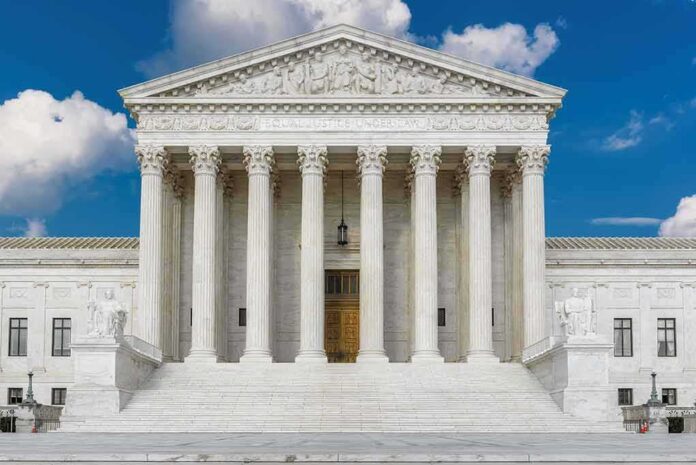
Justice Samuel Alito said on Fox News Sunday that he has an opinion about who leaked the draft Dobbs opinion. He added that the evidence is not strong enough for him or the Court to identify the person publicly. That short statement did two things at once. It revived the most explosive mystery in modern Court history. It also lined up with what the Court’s own investigation found: suspicion is easy, proof is hard.
Alito’s caution tracks the Court’s official standard. The marshal’s report did not meet the preponderance threshold, which means the evidence did not tip the scales even slightly toward any one person. For readers who expect a clean ending, that landmine matters. It sets a high bar that stops finger-pointing from turning into blame. That choice defends due process and, frankly, basic fairness. American conservative values put that first.
What The Investigation Established
The Supreme Court’s marshal led months of interviews and system checks after the 2022 leak. The report says investigators examined Court computer devices, networks, printers, and available call and text logs, and they found no forensic evidence showing who disclosed the draft. The report also concluded that an outside hack was unlikely, which narrowed attention to people with lawful access inside the building or working from home. That is the hard center of the public record.
The size of the access pool explains the stalemate. Many employees had a path to the document, and none confessed. Without a clear digital trail, a camera image, or a recovered message, the case stalled. That outcome is common when sensitive work leaves a thin footprint by design. The lesson is blunt: when systems do not log enough, truth gets foggy. If we want accountability, we need better logs before the next crisis.
The Gap Between Suspicion And Proof
Public reports emphasized that no one was publicly named or disciplined over the leak, which matches the marshal’s “unable to identify” finding. Alito’s on-air restraint honored that fact pattern. He did not float a name. He did not hint at a motive. He stayed inside the lines drawn by the evidence. That discipline matters more than it may seem. It protects the innocent and keeps the Court from turning rumor into record.
Some outlets framed Alito’s comment as a spark for new speculation. That is a risk whenever a high official hints at a private view. But the fix is not more guessing. The fix is process. If leaders want closure, they can back stronger record-keeping, tighter document handling, and clear audit trails. That approach checks the box for common-sense security without turning the workplace into a fishbowl.
What Would Actually Close The Case
Only new, specific evidence will move this from hunch to proof. A deeper technical audit that pairs access times with communications could shrink the window of opportunity. A structured release of more of the marshal’s working file could show whether any leads stalled for lack of data rather than lack of will. Sworn testimony from members of the investigative team could also clarify how far the probe narrowed the field before it hit the wall.
🚨 WOW: Supreme Court Justice Samuel Alito is speaking out about the leak of the Dobbs decision, saying it was a “grave breach of trust” that put the five justices in the majority at risk.
Alito said the leak “very predictably made the five of us in the majority targets for… pic.twitter.com/2NZWHMwrcc
— NanceMace (@Nancymace55) October 4, 2026
Until then, the official story stands. Alito has an opinion. The Court’s record shows no identified culprit by the required standard. The forensic checks found no digital breadcrumb that points to one person. The hack theory sits on the shelf as “unlikely,” which keeps the focus on insiders with access. That is not a thrilling ending, but it is a clear one. It respects evidence over impulse, which is exactly what the public should want from the Court.
Sources:
mediaite.com, washingtontimes.com, nypost.com, afp.com, townhall.com
© partiallypolitics.com 2026. All rights reserved.