Flight boards at Tehran’s main airport went nearly half empty within days of a new United States sanctions deadline, and the numbers tell a story the Iranian regime cannot spin away.
Story Snapshot
- Flight tracking data shows a 42% drop in traffic at Tehran’s Imam Khomeini International Airport after new U.S. sanctions took effect.
- The U.S. Treasury Department designated 27 Iranian airlines on September 8, targeting the last carriers not already under sanction.
- Treasury Secretary Scott Bessent warned that fuel suppliers, ground crews, and ticket sellers worldwide could lose access to the U.S. dollar system if they serve Iranian planes.
- Neighboring countries, including the United Arab Emirates, Oman, and Iraq, moved fast to suspend Iranian flights rather than risk U.S. penalties.
Treasury Targets the Last Iranian Carriers Standing
The U.S. Department of the Treasury’s Office of Foreign Assets Control announced on September 8 that it sanctioned 36 targets tied to Iran’s aviation sector under an operation called Economic Outcast. The agency said Iran uses its airlines to move weapons, personnel, and illegal cargo. Twenty-seven of those targets were Iranian airlines, covering nearly every carrier still flying that had dodged earlier sanctions rounds.
The move expanded pressure already placed on Mahan Air, Iran’s flagship sanctioned carrier long accused of shuttling fighters and supplies for Tehran’s regional proxies. This time, Treasury widened the net to the smaller airlines that had kept Iran’s skies connected to the outside world, closing a loophole that let flights continue despite years of earlier restrictions.
A Deadline Built to Choke Fuel, Tickets, and Ground Crews
Treasury Secretary Scott Bessent set a hard date. He told CNBC that starting September 23, all Iranian airlines would effectively shut down worldwide. His message to foreign businesses was blunt: anyone selling Iranian carriers fuel, landing services, or tickets after that date risked getting cut off from the U.S. dollar system entirely. That threat, known as secondary sanctions, does not punish Iran directly. It punishes any outside company that keeps doing business with it.
The strategy works because almost every airport, fuel depot, and ticket counter on earth depends on dollar-based banking somewhere in its operations. Losing that access can end a company overnight. Analysts have long noted that sanctioned airlines can own working aircraft and still go nowhere, because the service providers around them simply stop showing up once the legal risk becomes real.
Neighbors Move Fast to Avoid the Fallout
The reaction outside Iran came quickly. Iraq suspended Iranian flights into Baghdad within days of Bessent’s warning, according to Reuters sources. By September 24, the United Arab Emirates and Oman had barred Iranian airlines outright, marking what Reuters called the first major impact of Washington’s shift toward targeting third-country companies that keep servicing Tehran’s carriers.
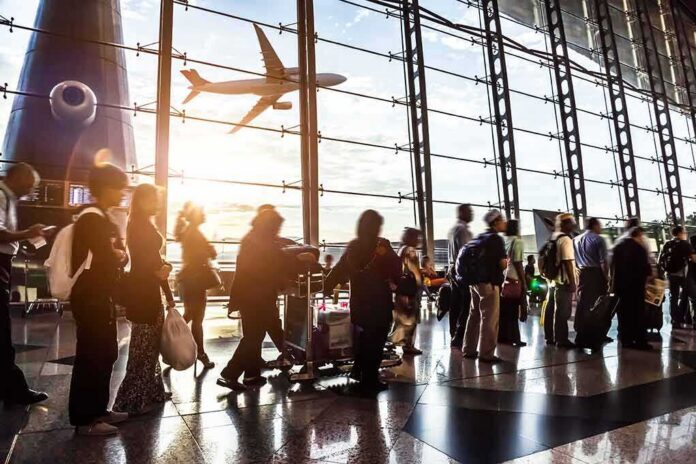
Imam Khomeini International Airport, Tehran’s main gateway, still listed scheduled arrivals and departures that Thursday, but the destination list had shrunk noticeably compared to before the deadline. Flight tracking data cited by outlets following the rollout showed traffic at the airport falling 42% once the sanctions deadline passed, a number that matches on-the-ground reports of grounded routes and canceled connections across the region.
Travelers Pushed Overland as Airlines Scramble
Al Jazeera reported that the sanctions pressure is already pushing Iranian travelers toward overland routes, since flying in or out of the country has become less reliable almost overnight. An aviation expert based in Iran described the disruption as reshaping how ordinary Iranians plan international trips, with land border crossings into Turkey and Iraq absorbing travelers who once flew.
NEW: UAE’s civil aviation authority has suspended Iranian airline flights to and from the country from Thursday until further notice.
GCAA said the order follows the US ban on Iranian carriers using airports worldwide. An Iran Airtour Tehran–Dubai flight was already pulled this…
— Perspective Vibe (@Perspectivibe) September 24, 2026
Iran International reported that some Iranian carriers attempted to keep flying internationally even after the September 23 deadline passed, testing how aggressively Washington and foreign regulators would enforce the new rules. That resistance lines up with a pattern seen for years in Iran’s aviation sector, where operators have built workarounds to keep planes moving despite sanctions designed to ground them entirely.
Why This Pressure Campaign Matters Beyond Tehran
This is sanctions enforcement working the way it was designed to work. Rather than chase Iran’s government directly, Washington squeezed the global companies Tehran depends on for fuel, tickets, and runway access. That approach respects American leverage over the dollar system without putting U.S. forces or taxpayers on the hook, and it is already producing measurable results at Iran’s busiest airport.
Supporters of the policy argue this is exactly how deterrence should work: make the cost of helping a hostile regime’s weapons-moving network too high for anyone to pay. A 42% drop in flights at Iran’s main airport within weeks suggests the threat was credible and the follow-through was real, not just rhetoric from Washington.
Sources:
insiderpaper.com, home.treasury.gov, reuters.com, iranintl.com, aa.com.tr, dw.com, aerospaceglobalnews.com, inss.org.il
© partiallypolitics.com 2026. All rights reserved.