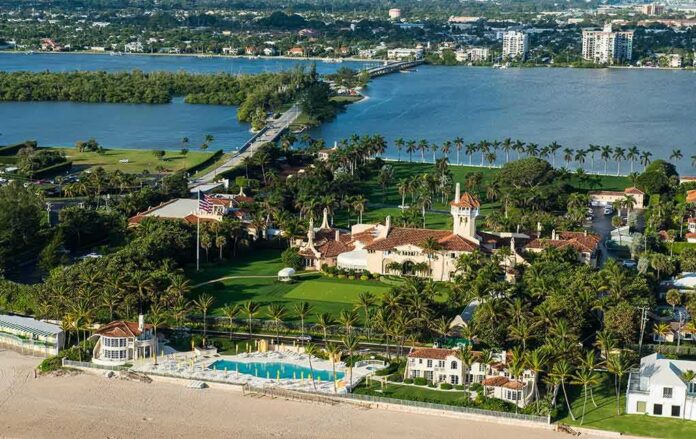
President Trump wants his Palm Beach County golf club formally designated as a U.S. Presidential retreat open to all presidents and visiting foreign leaders, and county officials have started talks on how to make it work.
Story Snapshot
- Proposal would designate Trump International Golf Club as a “U.S. Presidential Golf Course”.
- County owns the land; Trump’s company holds a long-term lease dating to a 1990s settlement.
- Plan envisions security upgrades and diplomatic use akin to Camp David, with no local tax burden, backers say.
- Commissioners directed staff to explore terms and legal structure, including a federal tenant arrangement.
A Concrete Offer With Camp David Ambition
Attorney Harvey Oyer notified Palm Beach County on September 3, 2026, that Trump International Golf Club could be designated a “U.S. Presidential Golf Course” for use by past, current, and future presidents and foreign heads of state. The letter outlined a facility for diplomacy and high security events, modeled on the Camp David concept, but sited minutes from a major airport. County leaders responded by instructing staff to begin discussions and review how such a designation could operate in practice.
The pitch frames the club as nonpartisan and enduring, not a personal perk. The offer says the property would serve any president, regardless of party, and welcome foreign delegations under federal security protocols. Supporters describe a ready-made complex with lodging nearby, large meeting areas, and controlled perimeters. They argue Florida’s weather and access reduce logistics strain compared to mountain terrain. The county’s review now turns on governance, money flows, and who signs on the federal line.
Who Owns What, And Why That Matters
Palm Beach County—not the Trump family—owns the land under the 27-hole course at 3505 Summit Boulevard, a result of a 1990s lawsuit settlement over airport noise. The Trump Organization holds a long-term lease and pays about $88,338 per month for more than 214 acres, according to county records referenced in prior reporting. That split—county as landlord, private operator as tenant—shapes every option on the table. Any new use must fit the lease or add a new agreement without saddling taxpayers.
Oyer’s letter floated a structure where the county could lease a designated area to a federal agency, with the county as landlord and the federal government as tenant for the retreat use. That model could separate official functions from the private club’s daily business. It could also answer the core question conservatives usually ask first: who pays, and for what. Commissioners have publicly stressed that local taxpayers should not carry new security or infrastructure costs tied to the proposal.
Security, Access, And The Airport Next Door
The course sits just south of Palm Beach International Airport, which cuts travel time but raises planning challenges for airspace and motorcades. A federal tenant arrangement could bring direct coordination with the United States Secret Service and the Department of Defense on no-fly windows, hardened perimeters, and motorcade routes. A county-federal lease could also clarify who funds temporary flight restrictions or road controls during visits. One commissioner flagged possible long-term flight pattern effects as a point to examine before any deal advances.
BREAKING: President Trump reveals to @pdoocy his potential plans to build a presidential retreat similar to Camp David on part of Trump International Golf Club in West Palm Beach.
Trump explains that the military and Secret Service suggested the idea because of the property's… pic.twitter.com/jKKgcEcOsj
— Fox News (@FoxNews) October 7, 2026
Conservative readers often ask whether government can use a private venue without creating private gain. The county’s unique position as landowner is the key fact here. The land is public; the tenant operates the club under a negotiated rent and terms; and a federal sublease or carveout could fence off official use from private commerce. If drafted cleanly, that approach can protect taxpayers, keep security decisions federal, and avoid hidden subsidies that erode trust.
The Pattern, And What Would Make This Different
Proposals that mix public duties with private properties attract scrutiny because they can look like self-dealing unless the contracts are airtight. Prior reporting documents that tension in other settings tied to presidential travel or events. This case has a built-in guardrail: the county already owns the dirt and controls the master lease. That means the public holds leverage over uses, standards, and rent. A federal lease layer could add transparency on costs, security, and scheduling that a simple handshake cannot deliver.
The decision ahead is not about golf. It is about building a practical, secure, bipartisan venue where presidents can host allies and rivals without draining local budgets. The checklist is clear: a written federal tenancy for retreat functions, plain rules on who pays for security and operations, protections for county taxpayers, and full compliance with ethics and procurement laws. Get those right, and Palm Beach County could host a modern Camp David with shorter drives, faster wheels-up, and less red ink.
Sources:
mediaite.com, palmbeachpost.com, therealdeal.com, politicalwire.com, traded.co, ajc.com, sun-sentinel.com
© partiallypolitics.com 2026. All rights reserved.