
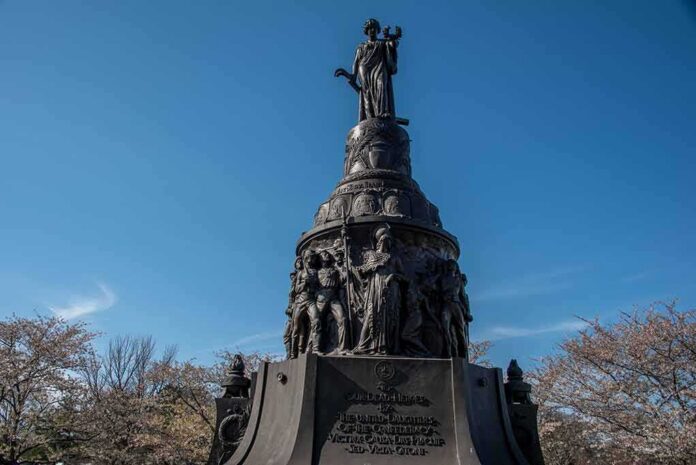
The Pentagon plans to reinstall Arlington’s Confederate memorial by 2027, with orders, a price tag, and a fight over what the plaque will say next.
Story Snapshot
- Defense Secretary Pete Hegseth directed the Army to restore the memorial at Arlington National Cemetery.
- Officials target 2027 after conservation and refurbishment; a new marker previewed that plan.
- Estimated public cost is about $9 million, without a published cost breakdown yet.
- Critics say the government stripped prior slavery context from web and plaque text.
What the Pentagon ordered and when the statue returns
Defense Secretary Pete Hegseth announced the memorial would be returned to Arlington, then directed the Army to restore it. Arlington officials confirmed the project and timeline details. The government placed a replacement marker that says the sculpture will be reinstalled in 2027 after “comprehensive conservation and refurbishment.” That language makes the plan more than talk. It sets a clock and centers physical preservation, not just a name change or new signage.
The money question lands fast. Task and Purpose reported the expected taxpayer cost at about $9 million. The outlet also reported that the Army has not solicited service-member feedback about how the move might affect morale or cohesion. That is a practical gap worth closing before shovels hit dirt. Dollars and troop culture both matter when decisions involve sacred ground and national storylines.
What changed on the plaque and website, and why it matters
Federal language that criticized the memorial’s imagery disappeared from Arlington’s website and from a cemetery plaque. The removed lines had described a “nostalgic, mythologized vision of the Confederacy” and “highly sanitized depictions of slavery,” and identified Black figures as enslaved people. Reporters documented the change and pressed officials on the edits. The new text is shorter and more neutral in tone, but it leaves out hard context about slavery and the Lost Cause narrative.
Supporters argue the restoration is about reconciliation and history, not praise for the Confederacy. Hegseth called it the “Reconciliation Monument” and framed the project as honoring American history rather than erasing it. That appeal reflects a conservative view: preserve the artifact, confront the past honestly, and let citizens judge for themselves. But preservation without context invites critics to claim the government is sanding off the rough edges of history.
The clash of expert views and what the facts can carry
Named historians challenged the content edits and the return plan. Karen Cox said the prior language was accurate because the memorial supports a false story that the war was about states’ rights, not slavery. Stephen West said the sculpture sanitized slavery and mythologized the Confederacy, and he opposed removing that explanation. Retired Army Brigadier General Ty Seidule called the memorial pro-slavery and anti-United States and said bringing it back would cut against Congress’s intent for removal.
These are assertions with scholarly weight, and they align with a plain reading of the imagery described in the earlier government text. On the other hand, the Pentagon’s concrete steps—directive, schedule, conservation plan—are facts on the ground. A responsible path would restore the artifact and add full, sourced context on-site and online. That approach squares with common sense and American conservative values: keep history visible, tell it straight, and trust citizens more than censors.
What to watch next: authority, costs, and credible context
Authority is step one. The directive exists, but the public has not seen the written order or the Army’s full project plan. Posting those documents would show the chain of command, the scope, and the standards for conservation. Cost is step two. The $9 million estimate needs a public breakdown that lists conservation, transport, site prep, security, interpretation, and maintenance. Sunlight lowers the temperature and limits waste, real or perceived.
Hegseth’s plan to restore Confederate memorial at Arlington expected to cost taxpayers $9 million
Task & Purpose— rose parsons (@lilstuff857) October 21, 2026
Context is step three, and it may decide the legacy of this decision. The prior federal text tied the memorial’s figures and symbols to the Lost Cause and to sanitized depictions of slavery. The government can restore the memorial and also restore that clear-eyed history. A direct, sourced plaque and a detailed website would defend against charges of whitewashing while honoring the duty to remember. Do both jobs well, and the fight shifts from slogans to facts.
Sources:
realcleardefense.com, crbcnews.com, people.com, newsweek.com, yahoo.com, taskandpurpose.com, ms.now
© partiallypolitics.com 2026. All rights reserved.