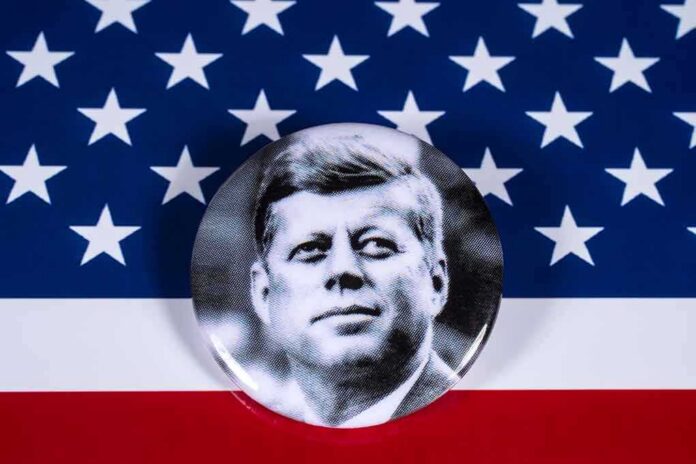
Nine Kennedy relatives moved in federal court to stop President Trump’s planned triumphal arch, warning it would damage the view and meaning of their family’s graves.
Story Snapshot
- Nine Kennedy heirs filed to intervene in Washington, D.C., federal court to block the arch.
- The filing says the structure would obstruct views of the Kennedy graves and the Eternal Flame.
- The family argues agencies approved the project without the needed vote of Congress.
- A judge already paused construction while broader lawsuits play out.
Who Filed, What They Want, and Why It Matters
Nine members of the Kennedy family asked a federal judge to let them join ongoing litigation over the arch. Their motion, filed November 10, names Rory Kennedy, Maxwell Taylor Kennedy, Christopher G. Kennedy, Kerry Kennedy, Courtney Kennedy, Kathleen Kennedy Townsend, Joseph P. Kennedy II, Joseph P. Kennedy III, and Edward M. Kennedy Jr. The filing says the project threatens the setting of their parents’ and grandparents’ graves and the John F. Kennedy Eternal Flame. They seek to block construction and protect the current views.
The family’s filing argues the arch would block or alter views from the Lincoln Memorial area toward Arlington National Cemetery. It asserts the effect would be permanent and would change how visitors, including the family, experience the gravesites. Their brief uses strong language, calling the proposal a “permanent denigration” of the graves and the Eternal Flame. Several outlets reported the location between the Lincoln Memorial and the cemetery, underscoring the visual stakes the family describes.
Where the Project Stands in Court and in Planning
A federal judge halted construction in early November for two weeks. The order arrived soon after a federal planning body granted a key approval for the arch. That pause gives the court time to weigh claims from multiple plaintiffs, including veterans and an architectural historian, who are challenging the project on legal and preservation grounds. The pause also limits any irreversible site work while the judge reviews the cases.
Project opponents point to the Commemorative Works Act, a federal law that sets rules for new memorials on federal land in Washington and nearby areas. They argue the National Park Service and the Department of the Interior allowed the arch to advance without the specific approval from Congress that the law requires at this site. The Kennedy motion echoes that claim, tying their family’s visual-impact concerns to the legal-authorization fight.
How Visual Impact Became the Center of Gravity
The visual-impact claim drives the family’s case. The filing says the arch would interrupt a long-standing line between the Lincoln Memorial and Arlington National Cemetery. That axis dates to early twentieth-century plans that shaped the Mall’s layout. News reports state the family believes this view helps tell a story of national unity after the Civil War, and that the arch would rewrite that story by inserting a towering new focal point in the sightline.
Some coverage cites a projection that the arch would place President John F. Kennedy’s grave in shade on dozens of days each year. Reports mention “about 50 days,” though the underlying technical studies are not in the public materials summarized here. Even without a shadow model in hand, the family’s brief anchors its request in the plain idea that height and placement can change both light and line of sight at sacred ground.
The Broader Pattern: Authority, Process, and Landscape
This showdown fits a familiar Washington pattern. Big memorial projects almost always raise three questions at once. First, who has the authority to build and where. Second, whether agencies followed all steps in environmental and historic review. Third, whether the new structure harms existing views or cultural resources. The arch fight checks each box, and the Kennedy family placed their name and standing on the visual and legal core of that argument.
🚨TAKE A LOOK🚨
There’s a lawsuit that was filed against the Trump administration to block the construction of Independence Arch in Memorial Circle.
Members of the Kennedy family are jumping into the lawsuit.
You know who’s also jumping in?
Norm Eisen, of course! pic.twitter.com/oAFqUY96Qq
— Breanna Morello (@BreannaMorello) November 12, 2026
The administration and its allies frame the arch as a tribute tied to 250 years of American history. That message will connect with many who see monuments as national confidence made stone. Yet common sense and conservative stewardship also ask who protects the rules and the landscape we already share. If Congress must say yes, then Congress should say yes or no. If sightlines carry meaning, then changes should be rare, justified, and proven in daylight, not rushed in shadow.
Sources:
time.com, npr.org, people.com, us.cnn.com, abcnews.com, usatoday.com, cbsnews.com, huffman.house.gov
© partiallypolitics.com 2026. All rights reserved.