Congress is not just arguing over policy this time; it is accusing the Pentagon chief of breaking war law.
Story Snapshot
- Rep. Thomas Massie filed eight impeachment articles against Secretary Pete Hegseth, centering on the War Powers Resolution.
- The charge sheet claims hostilities in Iran ran more than 90 days without approval and defied a congressional pullout directive.
- Hegseth calls the effort a sham and says the mission was lawful and necessary to stop a nuclear threat.
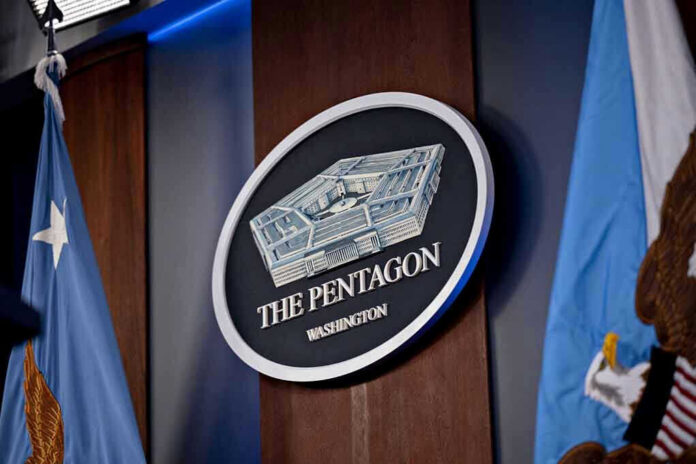
- A rare Pentagon briefing turned the fight into a public showdown over war powers and accountability.
A Vote That Puts War Powers On Trial
Rep. Thomas Massie forced a House vote to impeach Secretary of War Pete Hegseth, saying the secretary waged and sustained hostilities in Iran without the approval the law demands. The resolution cites the War Powers Resolution and says no declaration, no statute, no attack on the United States, and no imminent threat justified the operation. It alleges combat continued past the 60-day limit and even after both chambers ordered withdrawal through a concurrent resolution.
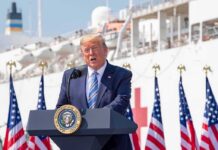
Hegseth met the push head-on. He told reporters the campaign against Iran was lawful, necessary, and successful in blocking a nuclear-armed foe. He dismissed impeachment as a political spectacle and said critics were taking shots at troops who delivered historic results. President Trump backed his secretary and said Iran’s military had been severely degraded, adding that the United States stood ready if conditions changed. The clash set up a clean test: who controls war when Congress and the White House disagree?
What The Articles Actually Allege
The resolution lists eight charges. Three define the core legal claim: starting and continuing a war in Iran without authorization, defying a congressional directive to withdraw, and exceeding the War Powers clock beyond 60 days and even 90 days. Other counts range across theaters and authorities. They accuse Hegseth of failures to protect civilians, lethal strikes on suspected drug boats, and unauthorized operations in Yemen under the banner of Operation Rough Rider, plus reporting failures under the War Powers Resolution.
One article claims retaliation against Senator Mark Kelly after he urged service members to refuse illegal orders, asserting improper use of Defense Department power to intimidate a sitting senator. That allegation, if proven, would reach beyond the long debate over war powers into direct punishment for protected speech. The charge is stark; the public record now shows the claim but not the underlying orders or files that would prove targeting or motive.
Law, Precedent, And The Real Stakes
Congress passed the War Powers Resolution in 1973 to stop open-ended wars launched by the executive branch. It requires consultation, fast reporting, and withdrawal absent approval after 60 days, with a short extension in some cases. Yet presidents of both parties have used force without new authorization many times since. That history explains why this fight matters: if impeachment fails, executive war practice grows again; if it succeeds, Congress may finally draw a bright line that sticks.
The House action reaches a Cabinet officer, which carries its own history. Congress has impeached a secretary before; William Belknap faced trial in 1876, showing that Cabinet officials are fair game for such checks. Massie’s move uses that tool to test something different from bribery or fraud: the boundary between policy judgment and alleged unlawful war making. The Senate’s threshold is high, but the record built here could shape future limits even if removal fails.
The Competing Stories Voters Will Hear
Massie’s case is precise on paper. It names the law, the time limits, and a claim that both chambers ordered withdrawal. It also sketches other operations to show a pattern, not a one-off. The weak link is public proof. The resolution does not yet carry the operational orders, the legal memos, or the casualty files that skeptics will demand. That invites opponents to call it a gloss on a policy rift rather than proof of high crimes.
Hegseth dismisses impeachment effort as 'political spectacle' https://t.co/XlWTjId8x7
— ABC7 Eyewitness News (@ABC7) November 10, 2026
Hegseth’s defense is simple and strong on message. He says the mission was lawful, urgent, and effective, and that the Pentagon and White House had all needed authority at the time. That answer aligns with decades of practice by both parties, which makes it familiar and thus convincing to many. Common sense says both claims can be tested. Congress should release the withdrawal directive and timelines, and the administration should release its legal basis. Sunlight will decide the winner.
Sources:
cbsnews.com, wmtw.com, ca.news.yahoo.com, history.house.gov
© partiallypolitics.com 2026. All rights reserved.