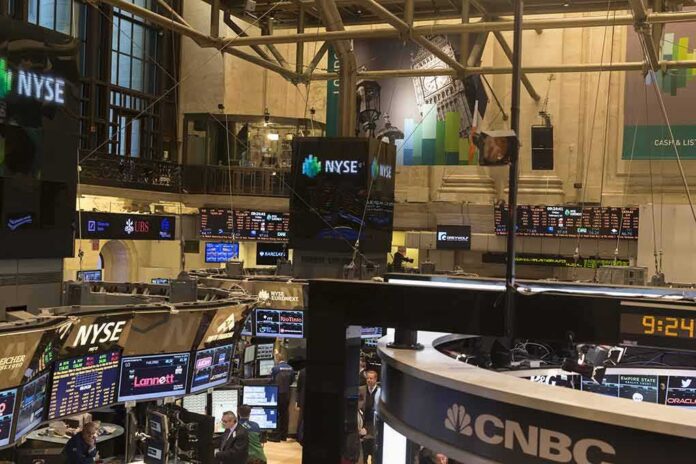
Wall Street’s worst day in nearly two years hit less than 48 hours after Democrats swept Congress, and the blame game started before the closing bell.
Story Snapshot
- Stocks plunged after Democrats won Congress, with tech and chip shares hit hardest.
- Reporters tied the drop to fears of tougher rules and slower data-center growth.
- Skeptics argued an overheated artificial intelligence trade finally cracked.
- History shows elections can move markets, but many forces drive big swings.
What actually happened on the screen
U.S. stocks fell hard two days after the vote count showed Democrats taking Congress. The tech-heavy Nasdaq logged its deepest one-day drop in 19 months. Chipmakers and artificial intelligence leaders led losses, erasing trillions in value. Market coverage tied the sell-off to concern that new Democratic majorities would slow data-center construction and tighten artificial intelligence oversight. That fear hit the exact companies that gained most from the artificial intelligence boom.
Major outlets connected the dots in real time. Journalists cited investors who worried about new rules, permitting delays, and power limits for giant computing sites. They reported the Dow Jones Industrial Average down more than 1,800 points and the Nasdaq down more than five percent. That is a brutal day by any standard. It was also a highly focused hit: the same group that ran hottest all year took the heaviest punch.
Why blame fell on politics so fast
The timing made the political link feel obvious. Democrats won both chambers and several statehouses. That result set clear policy expectations for energy, permitting, labor, and antitrust. Those levers touch artificial intelligence and data centers at every step. If new leaders slow power hookups or add compliance costs, cash flows can shrink. Markets price that risk at once. That is how a sector can break in a single day while other parts bend but do not snap.
There is a second reason the story stuck. The artificial intelligence trade dominated benchmarks and headlines all year. When the group wobbles, everything shakes. Bloomberg tallied how much of recent market wealth rested on ten artificial intelligence-linked giants. The number was huge. When that much value leans on one theme, a policy scare can look like a cliff, not a hill.
The rival case: a hot trade finally cooled
Market veterans pushed back on a one-cause story. Trader Gareth Soloway called it an artificial intelligence bubble popping. He pointed to steep drops from recent highs across chips and storage. When leaders fall 50, 60, or 70 percent from peaks, bubbles are the usual suspect, not ballots. He said panic washed out weak hands and set up future buys, but the air coming out was real, not political theater.
📊 MARKET NEWS BRIEF — Friday, November 6, 2026
━━━━━━━━━━━━━━━━━━━━━━━━
🔴 #1: AI/CHIP STOCK MASSACRE — NASDAQ ENTERS CORRECTION
Nasdaq -5.5%, S&P 500 -4.4%, Dow -3.4% Thursday — worst day since April 2025. Philadelphia Semiconductor Index (-12.25%)…— GammaTradingOfficial (@GammaTrading_OF) November 6, 2026
Fund manager Roger Montgomery argued the cycle looked classic. Hype fueled overbuilding and heavy spending. Then costs met limits in power, land, and water. Returns failed to match the price tags. He said big platforms faced more rivals, weaker pricing, and worsening cash flows. That makes trillion-dollar tags hard to defend. Elections can spark the sell signal, but excess often supplies the fall.
What history says about election shocks
Academic work gives a sober filter. Studies find that elections raise uncertainty and can swing returns and volatility. But event studies struggle to isolate votes from other news. Prices reflect many signals at once and often reverse fast after the first shock. The record supports a narrower view: politics matters, yet sector exposure, valuations, and new data arriving the same week often decide the size and path of the move.
That frame fits this week. The drop hit the most crowded trade tied to heavy capital needs and fragile supply chains. Political control raised real questions about rules and permits. But credit costs, competition, and resource limits also weighed on profits. When so many risks line up, common sense says do not pin the whole move on one headline. Weigh policy risk, but respect math and cash flow.
What to watch next
First, watch whether Congress signals clear artificial intelligence guardrails and faster permitting paths for power and data centers. Clarity often calms markets even when rules tighten. Second, track capital spending plans from chipmakers and cloud platforms. Sharp cuts would support the bubble-cooling case; steady plans hint at a policy scare that passes. Third, look at credit markets. If lenders demand higher yields for artificial intelligence-linked projects, equity rallies will face headwinds.
Finally, keep the long view. Elections can jolt prices. They rarely rewrite the laws of supply, demand, and competition. America grows best when rules are stable, energy is reliable, and innovation can scale without political whiplash. That is the conservative test: does policy expand productive capacity and reward real profits? If yes, markets will find their footing. If not, they will keep marking down the hype until the numbers add up.
Sources:
facebook.com, usatoday.com, finance.yahoo.com, fidelity.com, note.com, bloomberg.com
© partiallypolitics.com 2026. All rights reserved.