
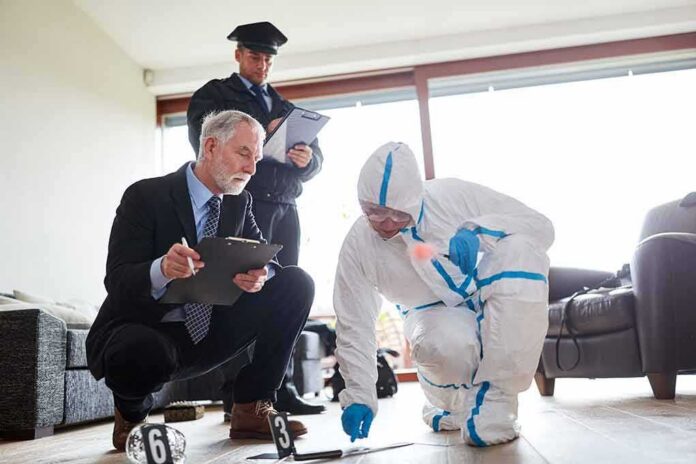
Deputies say a burglary call led them to a grisly scene and a son’s alleged confession to killing his mother.
Story Snapshot
- Deputies say they found no forced entry after a reported burglary near Miami Shores.
- First responders found Josephine Magloire dead with head and facial trauma.
- An arrest affidavit says her son admitted striking her with blunt objects.
- Prosecutors charged him with second-degree murder; he is held without bond.
Burglary Call Ends With A Homicide Arrest
Miami-Dade deputies responded to a reported home burglary near Miami Shores on November 12, 2026. Inside the residence, they found 64-year-old Josephine Louise Magloire with severe head and facial injuries. Miami-Dade Fire Rescue pronounced her dead at the scene, confirming the trauma was fatal. The caller, identified as Josephine’s son, told deputies a break-in occurred. Investigators quickly noted signs that did not match his story, and the case turned from a property crime to a suspected homicide.
Deputies documented blood on and near the victim’s body and broken glass stained with blood, details that shaped their view of what happened. The scene, according to reports describing the arrest affidavit, did not show forced entry. That gap between the claim and the physical evidence often marks the turning point in a death investigation. Detectives moved the son to the homicide bureau for an interview after seeing inconsistencies that they believed called his account into question.
Affidavit Describes A Damning Interview
The arrest affidavit, as quoted in multiple reports, states that the son admitted he struck his mother in the head several times with “various” blunt objects. Authorities attribute her death to those blows, based on the affidavit’s summary. The document’s description, while not publicly filed in full in these reports, gave prosecutors a foundation to bring a murder charge and hold him without bond while the case proceeds. Charging papers and custody status signal where the state believes the facts lead at this stage.
Prosecutors filed a second-degree murder count, which under Florida law covers an intentional act that shows a depraved mind without premeditation. The charge tells readers what the state thinks it can prove, not the final outcome. A trial judge and a jury will decide if the affidavit statements and scene evidence meet the burden. For now, the case sits in the well-known posture of a serious violent felony with a recorded death scene and a reported confession.
What Made The Burglary Story Collapse
Investigators rely on small facts that do not lie: locks, glass, blood flow, and disturbed items. Reports on the affidavit say deputies found no evidence of forced entry despite the burglary claim. That single observation redirects a case. It moves attention from an unknown intruder to the last known person with access. When the physical story conflicts with the spoken story, detectives test both hard. Here, that testing led to detention, an interview, and an alleged admission.
Researchers who study fabricated crime reports note patterns that trip up false stories, including extra details about method and timing that try too hard to sound real. Investigators also look for door and window failures that match the tale. When those do not line up, they cut fast through noise and press for clarity. This case’s quick turn from burglary to homicide fits that playbook. The scene told one story. The follow-up interview, according to the affidavit summary, told the same one even louder.
Family Violence, Public Safety, And Plain Common Sense
Family homicides are rare but devastating. Adults who kill a parent often leave clear scenes because the crime happens at home, not in public. That raises a durable public safety point: truth-in-reporting is a civic duty. Police resources are not infinite. A false burglary claim ties up patrol and forensics that should serve actual victims. Conservative common sense sides with accountability here. If the state proves its case, the court should impose a sentence that matches the harm, without excuses or soft handling.
Procedural Next Steps In A Serious Felony
The case now moves into routine but vital steps: formal arraignment, discovery, and pretrial hearings. Defense counsel will review interview procedures and any Miranda advisements. Prosecutors will organize crime-scene findings and medical conclusions. The medical examiner’s report will likely address the cause and manner of death and describe the injuries in detail. These steps do not change what deputies say they found that night, but they shape what jurors will see and hear if the case goes to trial.
Sources:
thegatewaypundit.com, local10.com, dailytruthfighter.com, newsbreak.com
© partiallypolitics.com 2026. All rights reserved.