Stephen Miller ordered White House staff to get counsel approval before meeting registered lobbyists on the complex, tightening the gate overnight.
Story Snapshot
- A written memo requires prior approval from White House Counsel for lobbyist meetings on-site.
- The directive came from Chief of Staff Stephen Miller’s office during his first week.
- The Office of Public Liaison is set as the primary outside contact channel.
- The rule limits certain meetings but does not impose a total ban on lobbyist access.
Miller’s Memo: What Changed, When, and Who Must Comply
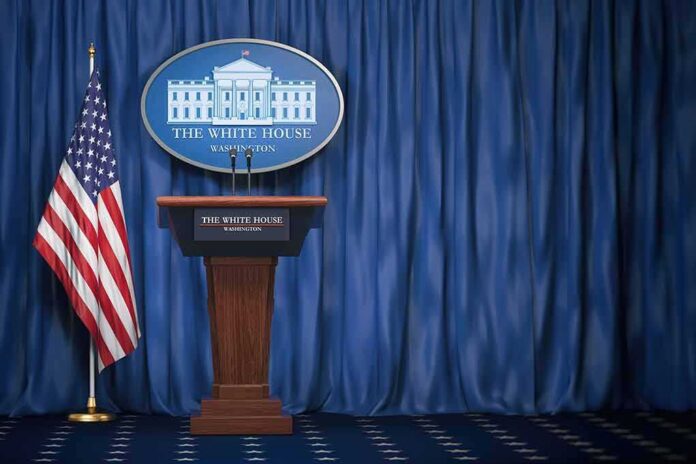
Stephen Miller’s office issued a written directive to staff in his first week as chief of staff. The memo states that staff must get prior approval from the Office of White House Counsel before any meeting on the White House complex with a registered lobbyist about government policy. The instruction applies to meetings on-site and ties access to a legal review. The language puts a gate in front of a door that used to open with a casual email or text.
The directive also routes outside outreach through the Office of Public Liaison as the main point of contact. Staff who want to engage with industry groups, trade associations, unions, and advocacy networks now have a named front door. That central channel matters. A single ledger of who asks for time, who gets it, and when, can show patterns that scattershot meetings hide. That is the promise of structure: fewer shadows, clearer lines, stronger accountability.
How the Approval Screen Works and Where It Stops
The policy creates an institutional screen before certain meetings occur. The Office of White House Counsel must sign off on covered meetings, which adds a legal review layer that did not exist in the same way before. The rule does not claim to be a blanket ban. It applies to meetings on the White House complex and to registered lobbyists. Off-site meetings and contacts with non-registered representatives are outside the memo’s stated scope, based on reporting at the time.
That boundary is where critics will test the system. If the only change is venue, the spirit fails while the letter stands. But a formal screen still matters. A prior legal check can catch conflicts, trigger recusals, and force staff to explain why a meeting must happen. Even when approval is granted, the act of asking raises the cost of casual access. That is a nudge toward discipline that aligns with basic good-government sense.
Why Central Gatekeeping Can Rein In K Street
Washington’s “revolving door” runs on personal ties and quick asks. Research shows that organized lobbying and insider connections can tilt who gets time and money in measurable ways, which is why any brake on ad hoc access is not window dressing. A counsel review and a public liaison channel cut the advantage of the well-connected scheduler. They also give leaders leverage to say no when the meeting is not in the public interest, or yes when subject-matter facts are needed from outside experts.
American conservative values emphasize clean lines of authority, fairness, and service to taxpayers. A White House that demands a lawful reason to meet before it grants time is acting on those values. The market for access thrives on speed and informality; the people’s business thrives on records and reasons. When government tightens the process, it helps citizens, not lobbyists, even if industry still speaks. Access becomes earned by need, not bought by proximity.
What To Watch Next: Proof In The Logs, Not The Slogans
Results will show up in paper trails. Approval requests, denials, and routing through the Office of Public Liaison can be measured over time. If on-complex meetings with registered lobbyists drop, while policy briefings with broader stakeholder groups continue, the reform is working as intended. If key actors shift to off-site meetings, further steps may follow. Reporters placed the memo amid a fast staff change, which suggests an intent to reset norms and tighten discipline.
White House Chief of Staff Stephen Miller is imposing new restrictions on lobbyist access, requiring staff to obtain prior approval from White House Counsel before holding policy-related meetings with registered lobbyists on White House grounds.
The directive comes just three… pic.twitter.com/7w5Nz41scP
— AF Post (@AFpost) November 13, 2026
One fair caveat from reports is that the memo does not spell out approval criteria or timelines, which leaves room for case-by-case judgment. Judgment is not a flaw when paired with leadership accountability. It is how a White House protects the president’s time and keeps focus on results. The simple test remains clear: does the new screen make it harder to buy face time and easier to serve the public? The memo sets that test. The follow-through will answer it.
Sources:
thegatewaypundit.com, politico.com, nytimes.com
© partiallypolitics.com 2026. All rights reserved.