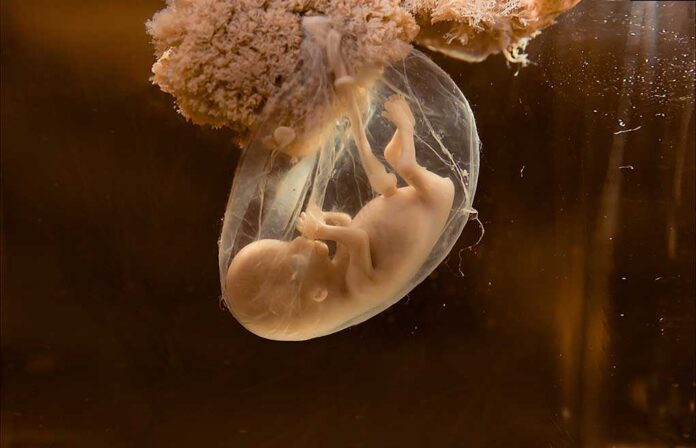
Two out of three couples who split up after freezing embryos choose to throw them away.
Quick Take
- A study of 141 separated couples at London Women’s Clinic found 66% chose to discard stored embryos, about one-fifth kept them, and just 4.2% transferred them to an ex-partner.
- The 1992 Davis v. Davis ruling in Tennessee said frozen embryos deserve “special respect” but are not legally persons or property.
- A New York court recently froze a bitter fight over two embryos after the couple signed two conflicting disposition agreements.
- Fertility industry guidelines call discard a normal, permitted option, framing it as part of patient autonomy rather than an ethical crisis.
What The Numbers Actually Show
Records pulled from London Women’s Clinic between 2019 and 2025 tracked 141 couples who split up while embryos sat frozen in storage. Most of them, 66%, decided to destroy the embryos rather than keep or share them. Roughly one in five couples held onto them, and only a small sliver, 4.2%, agreed to hand them over to an ex-partner for future use.
That pattern raises a question most couples never think through before starting in vitro fertilization (IVF): what happens to the embryos if the marriage doesn’t survive? Fertility clinics create these embryos during a hopeful chapter of a relationship. Divorce turns them into a leftover asset nobody quite knows how to handle, legally or morally.
Pro-life advocacy groups have seized on this data, arguing it proves IVF manufactures human life only to discard it when convenient. Critics of the practice point to the Tennessee Supreme Court’s 1992 Davis v. Davis decision, which called frozen preembryos neither “persons” nor “property,” but something occupying “an interim category” deserving “special respect because of their potential for human life”. That language has shaped three decades of embryo custody law.
Why Courts Keep Landing On Destruction
The Davis case itself ended with the court favoring the spouse who wanted the embryos destroyed over the spouse who wanted them donated. The justices reasoned that forcing someone into unwanted genetic parenthood outweighs another person’s wish to give embryos a chance at life, so long as that person has other paths to parenthood. That balancing test still guides judges today, even when it produces outcomes many Americans find troubling.
A newer dispute in New York shows how messy this gets when couples change their minds. The pair signed one agreement in 2021 promising to donate leftover embryos to research if they divorced. Then in 2023, they signed a second agreement saying the embryos would go to whichever partner won them in a divorce settlement. Courts have since blocked NYU Langone Fertility Center from destroying the embryos while judges sort out which contract controls.
The Industry’s Case For Business As Usual
Fertility medicine’s leading professional group, the American Society for Reproductive Medicine, treats embryo disposal as a routine, permissible choice, not a moral emergency. Its ethics guidance lists laboratory discard right alongside research donation and continued storage as acceptable options, framing the decision as part of a patient’s right to control their own reproductive future. The group recommends couples sign disposition instructions before treatment even begins, specifically naming divorce and separation as scenarios to plan for.
The industry’s preferred fix sounds simple: freeze eggs instead of embryos, so no ex-partner ever holds veto power over what happens next. That advice sidesteps the deeper question entirely. It doesn’t ask whether creating embryos in bulk, with discard built in as an expected outcome from day one, puts clinics in the business of manufacturing lives meant to be thrown away under certain conditions.
What Gets Lost In The Legal Language
Courts and clinics keep framing this as a contract dispute, a property question, or an autonomy right. That framing conveniently avoids the harder moral conversation Americans have had about life at every stage, from conception forward. A legal document deciding an embryo’s fate feels sterile compared to what it actually represents, a decision about potential human life made in a lawyer’s office years after the embryo was frozen.
Supporters of IVF rightly note the procedure has helped millions of families have children who otherwise couldn’t. But the disposal numbers deserve honest scrutiny, not dismissal as a side effect of modern medicine. Clinics and courts built a system where destruction became the default outcome for two-thirds of separated couples, and almost nobody asked whether that should trouble us before the embryos were created.
The full peer-reviewed study behind the 66% figure hasn’t been published in detail, and questions remain about why couples chose discard, whether it followed genuine informed consent, or simply defaulted when storage fees lapsed. Those gaps matter, and they deserve answers. But the underlying trend, that divorce routinely ends with embryos destroyed rather than preserved, stands on solid clinical record-keeping, not speculation.
Sources:
lifesitenews.com, nycourts.gov, withersworldwide.com, abcnews.com, quimbee.com, spuc.org.uk, asrm.org, aaml.org
© partiallypolitics.com 2026. All rights reserved.