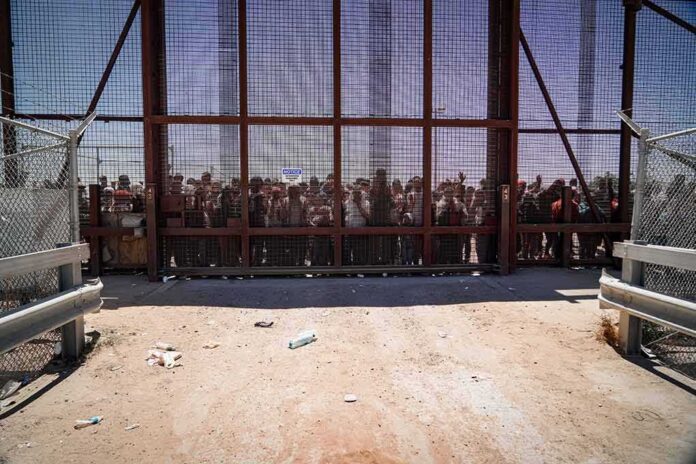
Spain’s tiny North African city of Ceuta turned into an open-air campsite this week after thousands of migrants swam, climbed, and walked across the border from Morocco in a matter of days.
Quick Take
- Thousands of migrants crossed into Ceuta from Morocco, with local leaders calling it a humanitarian and social emergency.
- Reception centers filled up fast, leaving hundreds of people sleeping outdoors in parks and on beaches.
- At least 18 people drowned trying to reach the enclave, and some reports put the death toll far higher.
- Spain sent extra troops and police to Ceuta as officials scrambled to manage the surge and arrange returns to Morocco.
A Border Overrun in a Matter of Hours
Reuters reported thousands of migrants crossed into Ceuta on foot, adding to more than 1,500 people who swam into the city over the previous week. Ceuta’s local leader, Juan Vivas, called it “a total humanitarian and social emergency,” according to El País. Spanish police went further, warning publicly that the city was on the edge of collapse under the weight of new arrivals.
Footage from Ceuta, Spain, shows a man struck in the neck during unrest, with reports attributing the attack to a Moroccan migrant. The incident comes amid a mass border influx that overwhelmed the enclave and prompted Spain to deploy the military to restore order. pic.twitter.com/bj35CODMMv
— @Sky (@Sky_Tradez_) August 1, 2026
The border police association’s local head, Rachid Sbihi, described it bluntly to Forbes as “total chaos,” saying the frontier had “completely collapsed”. That kind of language from officials on the ground, not activists or pundits, is what turns a migration story into a governance crisis. When the people responsible for order say they’ve lost it, that’s news, not spin.
Shelters Filled, So People Slept in Parks and on Beaches
The Guardian reported migrant reception centers were overwhelmed, with hundreds of people sleeping in the streets because there was simply nowhere else to put them. German outlet Tagesschau reported many migrants spent the night outdoors and did not know where to find toilets, water, or food. That detail matters. It shows a city whose basic services buckled almost overnight, not a planned or orderly resettlement effort.
El País described the scene in stark terms: quiet streets filled with barefoot young people, shaded parks turned into open-air sleeping quarters, and beaches once dotted with umbrellas packed with new arrivals instead. This is what an overwhelmed system looks like in real time, not a policy debate on paper. Local families watched their public spaces transform within a single afternoon.
Deaths and a Military Response
Le Monde reported at least 18 people drowned during the crossing attempts, while Spanish officials at one point estimated close to 50,000 crossings within a 24-hour window. Other outlets, including FRANCE 24, later reported the death toll climbing higher. Spain responded by sending military reinforcements, additional police, and border guards into Ceuta, according to Reuters and Euronews. That kind of deployment does not happen for a routine border crossing. It happens when a government believes it is losing control of its own territory.
Why the Numbers Keep Shifting
Exact counts vary widely across the reporting, from roughly 1,500 arrivals over a week in some accounts to claims of tens of thousands within a single day in others. That gap is common in fast-moving border events, where officials, wire services, and eyewitnesses are all counting different things at different moments. It does not erase the core fact that Ceuta faced a sudden, serious overload it was not prepared to handle.
What remains unconfirmed by direct, on-the-record documentation is the specific claim that migrants defecated openly in public spaces. Reports do confirm people lacked access to toilets and slept outdoors for days, which raises obvious sanitation concerns in a crowded urban setting. But turning “no bathroom access” into a documented pattern of public defecation requires municipal health records or firsthand accounts that have not yet surfaced in the reporting reviewed here.
What This Means Going Forward
Spain and Morocco have since coordinated on returning migrants, a move officials on both sides frame as cooperation rather than crisis management. That framing may ease diplomatic tension, but it does not undo what residents of Ceuta actually lived through: a border that gave way, shelters that ran out of room, and a city government publicly asking Madrid for emergency help. Whatever the final numbers turn out to be, that much is not in dispute.
Fact Check: Video PREDATES July 30, 2026, Migrant Influx To Ceuta, Spain https://t.co/pckxMYHBTq
— Lead Stories (@LeadStoriesCom) August 1, 2026
Ceuta’s ordeal is a reminder that porous borders eventually produce a bill someone has to pay, whether in overwhelmed shelters, strained police, or families sleeping in a public park. Spain is now paying that bill in real time.
Sources:
townhall.com, lemonde.fr, english.elpais.com, bbc.com, theguardian.com, aljazeera.com, youtube.com, forbes.com
© partiallypolitics.com 2026. All rights reserved.