Police say a 12-year-old boy pulled the trigger in a killing that left a 13-year-old dead on a D.C. sidewalk.
Story Snapshot
- Officers arrested a 12-year-old boy in Northeast D.C. for voluntary manslaughter while armed.
- The charge ties him to the July 11 shooting that killed 13-year-old Ahmad Mims on Rosedale Street NE.
- First responders found Mims with a gunshot wound around 8:24 p.m.; he died at the scene.
- A search-warrant affidavit described a claim that Mims hit the suspect’s sister before the shooting.
An arrest that shocks the conscience and tests the law
Metropolitan Police officers with the Capital Area Regional Fugitive Task Force found and arrested a 12-year-old boy from Northeast D.C. on August 19, 2026. Police charged him with voluntary manslaughter while armed. The case stems from a July 11 shooting in the Kingman Park area. The charge does not allege premeditated murder. It alleges an intentional killing under circumstances that reduce moral blame. The suspect’s age alone ensures this case will draw national attention, and local heat, fast.
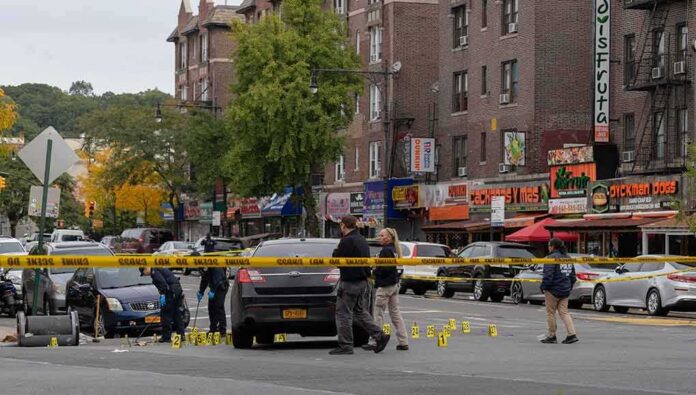
Officers responded to the 1600 block of Rosedale Street Northeast just after 8:20 p.m. on July 11. They found 13-year-old Ahmad Mims on the sidewalk with a gunshot wound. D.C. Fire and Emergency Medical Services pronounced him dead at the scene. The time, the place, and the result are not in dispute. Those facts set the stage for a focused prosecution built on witness accounts, video, and any forensics police can present in court.
What investigators say ties the child to the crime
Reporters who reviewed a search-warrant affidavit say witnesses told detectives the shooting followed an incident in which Mims hit the suspect’s sister. That allegation, if credited, fits the legal shape of voluntary manslaughter. The charge often reflects a heat-of-passion act under claimed provocation rather than a planned killing. That is not a defense, but it explains why prosecutors chose this charge rather than first-degree murder at this stage.
Police and local media also pointed to video that places teens together shortly before the killing. A broadcast report described footage of two teens waiting in a hallway minutes before the shot that killed Mims. Such video helps build a tight timeline. It can support identification, show movements, and anchor later forensic claims, like gunshot residue, shell casing matches, or recovered weapon links, if those emerge in court filings.
The legal road ahead for a defendant who is barely a teenager
D.C. juvenile law tries to hold young offenders accountable while recognizing they are still developing. The United States Supreme Court has ruled that courts must sentence children differently than adults because of those differences. Mandatory life without parole for juveniles is off the table. Any disposition must weigh youth, capacity for change, and public safety. That framework does not excuse violence. It tells judges to balance punishment with a real path to reform.
This case will likely unfold in juvenile court under privacy rules that shield the child’s identity. That setting can limit what the public learns as the case moves. Prosecutors must still prove who fired the shot and why the law fits the act. Defense counsel will test every link: witness certainty, video clarity, and any forensic work. One clear fact remains: a seventh grader now faces a homicide charge that could shape the rest of his life.
What this case says—and does not say—about youth crime
High-profile cases like this drive fear and policy talk. They should also drive clarity. District data show total violent crime fell to a 30-year low in 2024 compared with 2023. Police also reported that juveniles made up less than a third of arrests for violent crime that year. Most violent offenders are adults, even when a youth case breaks through and dominates the news cycle. Policy must address facts, not just headlines.
Neighborhood safety still demands action that adults lead. Families, schools, churches, and city agencies have roles no court can fill. Clear boundaries, early help for at-risk kids, and swift, certain consequences for illegal gun use can work together. That is common sense and consistent with conservative values: protect the community, insist on order, and give a child a chance to change when the law allows. Justice and mercy are not opposites here; they are the plan.
The stakes for the court, the city, and a grieving family
Prosecutors will try to prove the charge of voluntary manslaughter while armed with credible evidence. The defense will press for the strongest protections a child defendant is due. The judge must honor both duties at once: safety for the city, and fairness for a 12-year-old under the law. None of that brings back Ahmad Mims. The task now is sober justice, not spectacle, delivered with the discipline this case, and every victim’s family, deserves.
Sources:
washingtontimes.com, wusa9.com, dcchroniclenews.com, abcnews4.com, dccourts.gov
© partiallypolitics.com 2026. All rights reserved.