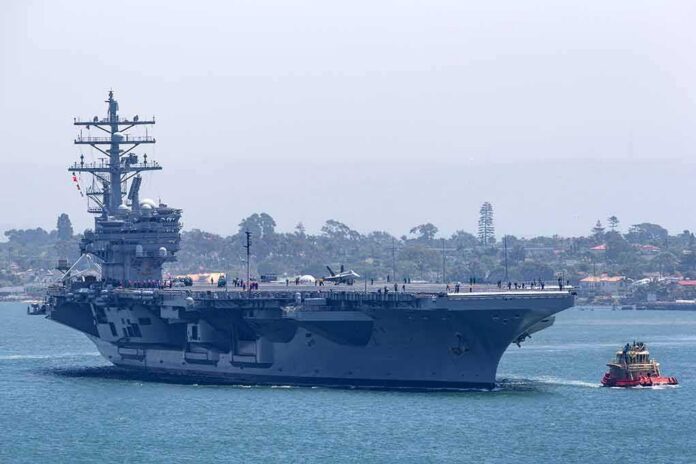
Two U.S. senators just forced the Navy to answer hard questions about life aboard a combat-deployed carrier where families say basics like food, plumbing, and morale are breaking down.
Story Snapshot
- Senators asked the Pentagon to investigate conditions on the USS Abraham Lincoln after family complaints.
- Reports cite food shortages, broken toilets, moldy showers, and fraying mental health during a record deployment.
- Navy officials deny a spike in suicide risk but concede long deployments strain crews.
- The carrier’s mission extensions and scarce port calls fueled rising tension and public pressure.
Senators Press For Answers After Mounting Family Reports
Senator Richard Blumenthal and Senator Ruben Gallego demanded an inquiry into shipboard conditions on the USS Abraham Lincoln. Their letter to the Defense Department cited reports of food shortages, broken plumbing, and a growing mental health strain during a record deployment. The move followed weeks of family accounts to local and national outlets that described moldy showers, nonworking toilets, and bare shelves for basic hygiene items. Lawmakers want timelines, fixes, and accountability from Navy leadership.
Public pressure grew as families shared details with reporters and at community meetings. They described rationed meals, long lines for limited food, and laundry machines down for weeks. Some said hot water failed in showers, while other plumbing went offline for stretches. These claims stirred action because the ship carries more than 5,000 sailors and Marines on a high-tempo combat mission. When basics slip at that scale, small problems ripple fast across safety, readiness, and morale.
A Deployment Stretched Past The Breaking Point
The USS Abraham Lincoln’s deployment ran far past normal, with two extensions, scarce liberty, and nearly continuous operations in a war zone. Reporting placed the carrier at sea for roughly nine months with only one port visit. That pace wore down crews and leaders, and it limited chances to fix ship systems or replenish comfort items beyond standard logistics. Extended missions add risk because fatigue, thin supplies, and deferred repairs stack up over time.
Claims of attempted overboard incidents drew sharp attention from families and the press. These reports fed urgent questions about watch schedules, counseling access, and command climate on the carrier. The facts under review still deserve careful sorting, but the pattern people flagged fits a known risk of long deployments: when rest, food quality, and privacy fall, stress soars. That stress can show up in discipline issues, medical visits, and safety lapses if leaders cannot get ahead of it.
Navy Pushes Back On Suicide Trend Claims While Admitting Strain
U.S. Navy officials said they have not identified a rise in suicidal thoughts or attempts aboard the ship. They acknowledged, however, that extended deployments put significant strain on service members and their families. That split response—rejecting a specific mental health spike while recognizing real pressure—matches the Navy’s usual posture in these disputes. Sailors can handle tough missions, but even elite crews need decent food, clean spaces, and time to reset between flight ops and watches.
Congressional Democrats demanded answers on Wednesday about conditions aboard the USS Abraham Lincoln, following reports of food shortages, broken plumbing and mental health crises during the aircraft carrier’s record-setting deployment.
US senators demand inquiry into conditions…— Fakhar Yousafzai (@fakharzai7) August 13, 2026
American conservative values align with two clear points here. First, troops deserve straight talk, strong logistics, and firm standards. If chow runs short and pipes fail, leaders must fix it fast, not paper it over. Second, mission focus matters. The carrier is flying combat sorties. A force that eats well, sleeps enough, and showers hot performs better and makes fewer costly mistakes. Lawmakers of any party should press for both: hard accountability and unwavering support to win the mission.
What An Inquiry Should Nail Down Fast
Investigators should track five items with dates and paper: food purchase orders and delivery logs; maintenance tickets for plumbing and laundry; ship store inventory records for soap, deodorant, and toothpaste; counseling and medical access metrics; and port visit plans changed by operational orders. These records can confirm what failed, why it failed, and how fast leaders acted. Clear timelines beat rumors. If the logs show gaps, the Navy must close them before the next sortie cycle.
Congress will also look at whether the extensions were avoidable or a wartime necessity. If the mission drove the timeline, then logistics and habitability should have scaled up to match. If supply ships struggled, the fleet needs better routing, not excuses. If equipment failed, the question becomes parts, man-hours, and authority to prioritize fixes. Families did their job by sounding the alarm. Now the Navy must do its job by proving that the force can fight hard and live decently at the same time.
Sources:
wsws.org, yahoo.com, moneycontrol.com, youtube.com, snopes.com, instagram.com
© partiallypolitics.com 2026. All rights reserved.