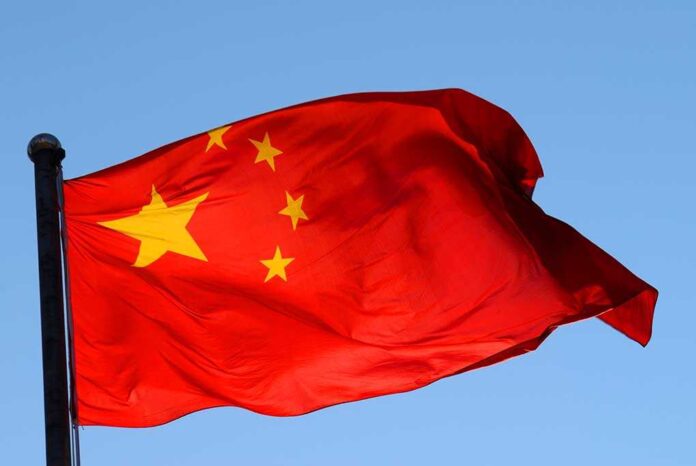
China’s Ministry of State Security is ramping up warnings against government workers flaunting state secrets online, stirring concerns over privacy, surveillance, and the tightening grip of the Communist Party.
At a Glance
- China’s Ministry of State Security cracks down on public workers sharing state secrets online.
- Warnings focus on new employees and social media risks amid US-China tensions.
- Recent incidents highlight the severe penalties for leaking information.
- Observers question the political motives and transparency of these warnings.
China’s Crackdown on Leaking State Secrets
China’s Ministry of State Security (MSS) is intensifying its public warnings to government workers, emphasizing the dangers of leaking state secrets online. The focus is primarily on public workers, especially new employees who might be drawn into risky behavior on social media. This move comes at a time when US-China relations are already fraught with accusations of espionage and cyber intrusions.
The MSS, China’s main intelligence and counterintelligence agency, established in 1983, has historically operated in secrecy. However, under Xi Jinping’s leadership, the agency has taken a more aggressive public stance. This is part of a broader campaign reflecting China’s growing concerns about espionage, information security, and the role of foreign intelligence agencies.
High-Stakes Consequences
In recent months, the MSS has released multiple statements highlighting the risks faced by public workers who inadvertently expose state secrets. For instance, a new employee named Jiang faced disciplinary action after posting a photo of a confidential document on WeChat Moments. Another worker, Tian, unwittingly leaked information by discussing a project in public, leading to an online breach. These cases underscore the severe penalties that accompany such breaches, with the MSS not shying away from imposing harsh sentences.
The agency’s warnings are part of a broader narrative that paints a picture of constant espionage threats. This tactic not only aims to deter potential leaks but also strengthens the MSS’s public role and the ruling party’s grip on power. Yet, the lack of transparency in these announcements raises questions about their true intent and whether they serve political purposes as much as security ones.
The Political Agenda Behind Public Warnings
Critics argue that the MSS’s public campaigns are as much about politics as they are about security. The frequent and sometimes vague warnings serve to reinforce the perception of external threats, thereby justifying tighter controls over information sharing. Observers suggest that this strategy is part of a broader effort by the Chinese Communist Party to consolidate power and suppress dissent under the guise of national security.
Social media platforms like WeChat are both tools for communication and potential vectors for leaks, further complicating the balance between security and privacy. The MSS’s increasing use of social media for public campaigns reflects a trend of “securitization” in Chinese governance, where a wide range of issues are framed as national security threats.
Implications for China’s Public Sector
The consequences of this crackdown are wide-reaching. In the short term, public workers face increased scrutiny and discipline, leading to a possible chilling effect on their online behavior. In the long term, stricter controls over information sharing could lead to increased surveillance and self-censorship among government employees. This could also impact research and innovation, as fear of leaks might discourage collaboration or the use of digital tools.
Economically, the crackdown could hinder technological and scientific advancement if researchers and professionals become wary of sharing data. Socially, the campaign may foster a climate of anxiety and mistrust, both within government agencies and the broader public. Politically, the Chinese government’s narrative of external threats continues to strengthen, further entrenching the MSS’s authority and the CCP’s control.