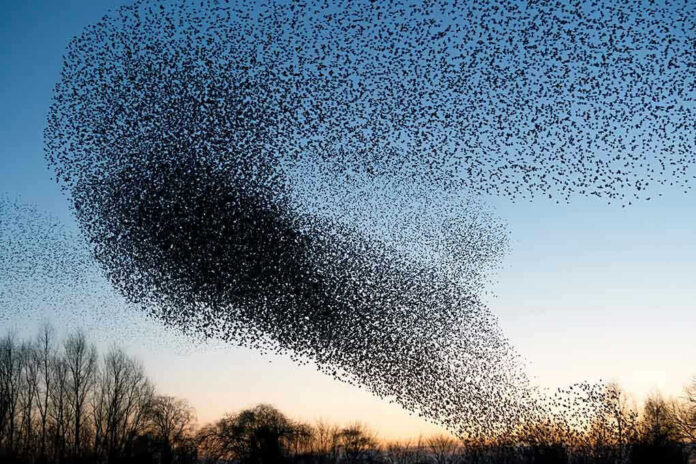
Millions of government-bred flies are about to rain from the Texas sky—and believe it or not, this is what’s supposed to save our ranchers and livestock from flesh-eating maggots, not a dystopian prank or a bad joke at taxpayer expense.
At a Glance
- The USDA is launching a campaign to drop millions of sterile flies on Texas and northern Mexico to fight the return of the flesh-eating New World Screwworm.
- This “solution” comes after a major outbreak was detected in Texas in May 2025, threatening the livestock industry and public health.
- Import restrictions on live animals from Mexico are in effect, hammering ranchers already battling inflation and endless regulation.
- The new plan includes building a fly-breeding facility in Mexico and a distribution center in Texas—because clearly, more government infrastructure is the answer.
Government to the Rescue: Millions of Flies, Billions of Dollars
Just when you thought the stories about government overreach and bizarre solutions couldn’t get any wilder, here comes the USDA with their latest “innovation”: dumping millions of sterilized flies across the borderlands. Why? Because the flesh-eating New World Screwworm—the same parasite that nearly wiped out parts of the Southwest livestock industry decades ago—is back, and apparently, the only thing standing between our ranchers and economic ruin is a swarm of government-bred insects. The plan is simple: overwhelm the wild screwworm population by flooding the area with irradiated, sterile male flies, so that when they mate, the eggs never hatch. This grand experiment was last tried in the 1960s and, against all odds, it actually worked. But now, after decades of government neglect, border chaos, and regulatory overkill, the pest is back—and so is the taxpayer-funded bug drop.
For those keeping score, this means new fly factories are being built in Mexico—on our dime, of course—and a distribution hub is being set up in Texas. One can only imagine the red tape, the bureaucracy, and the endless parade of consultants cashing in on yet another crisis. Meanwhile, the pain falls squarely on the shoulders of American ranchers, who are already reeling from inflation, endless government mandates, and a border that’s more sieve than shield.
A Crisis Decades in the Making—And Who Pays?
The New World Screwworm is not some trivial bug; its larvae infest open wounds, devouring the flesh of livestock and even humans. Until the 1960s, this menace cost U.S. ranchers up to $100 million a year in losses. The USDA’s original sterile insect campaign was hailed as a miracle, but, like clockwork, the government lost focus. The screwworm survived in the Caribbean and South America, and with lax border controls and endless cross-border traffic, it was only a matter of time before this pest found its way back into Texas. Now, with the May 2025 outbreak traced right to a resurgence in Mexico, the border is slammed shut for live cattle, horses, and bison. Ranchers are left holding the bag—again—facing not just lost income and dead animals, but the specter of bureaucrats handing out advice while their livelihoods are on the line.
Livestock producers have every right to be furious. They’re told to accept the fly drops as “science-based” and “cost-effective,” while also navigating the fallout from border policies that fail to protect American interests. The CDC, always quick with a warning, has issued guidance for anyone with open wounds—because nothing says public health like the risk of flesh-eating maggots.
Border Security, Bureaucracy, and the Price of Neglect
There’s a bitter irony in watching the same government that can’t secure a border now scramble to secure the border’s livestock with a cloud of bugs. The new fly factory in Mexico is scheduled to open in July 2026. Until then, ranchers are stuck with import restrictions, heightened surveillance, and the knowledge that their fate rests in the hands of bureaucrats and, yes, millions of sterilized insects. While officials tout cross-border cooperation, the reality is that every delay in eradication means more economic pain for rural families and communities. The livestock industry stands to lose hundreds of millions if this outbreak isn’t contained quickly. But, as usual, the burden falls hardest on the American worker, not the agencies or consultants raking in taxpayer dollars to reinvent the wheel—or in this case, the fly.
At the root of it all is a familiar story: government agencies react to disasters of their own making with expensive, convoluted fixes, while the people who make this country work are told to sit tight and trust the process. The success of this program will depend on vigilance, cooperation, and—let’s be honest—a little luck. But let’s not pretend this is anything other than a band-aid on a wound opened wide by decades of policy failures and misplaced priorities.