New York City just bet a decade on the claim that slowing the worst drivers and fixing the riskiest intersections will save thousands of lives.
Story Snapshot
- A 10-year street safety plan promises 100+ commitments across 19 agencies.
- The city targets repeat reckless drivers tied to a large share of deaths.
- Intersection daylighting and redesign will scale to at least 1,000 sites each year.
- Critics say key pieces lack detail, including pedestrian-only districts.
The City’s Big Swing: A 10-Year Blueprint With Real Teeth
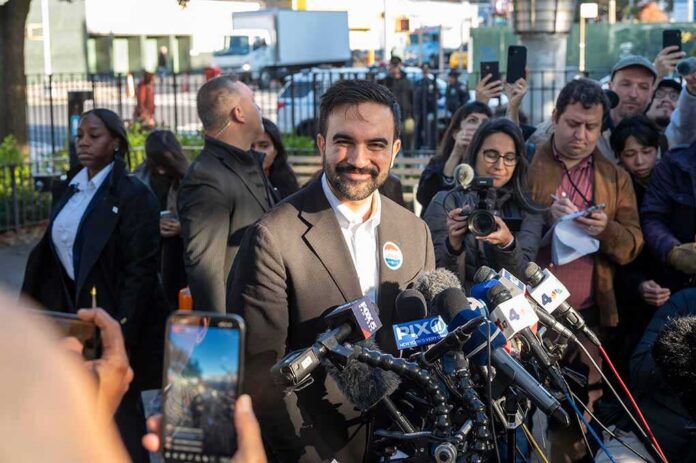
Mayor Zohran Mamdani launched “Vision Zero Reimagined,” a city plan that stretches across ten years and more than one hundred policy moves. Nineteen agencies will coordinate the work, from enforcement to design to freight changes. City Hall frames this as a safe systems approach. The plan assumes drivers make mistakes, so streets must forgive errors without turning them fatal. That means physical speed control, better sight lines, and vehicles that threaten less harm when crashes occur.
The blueprint focuses hard on a small group that causes big damage. Officials say repeat dangerous drivers account for a large share of deadly crashes. The city will use a “super speeder” program, tougher action on fake or hidden plates, and standards that push the riskiest drivers off the road. That matches a simple safety truth: reduce extreme speeding and you cut deaths. The details on methods and case flow will matter for results and fairness.
Designing Out Mistakes: Intersections, Speed, and Visibility
The plan scales proven fixes at the city’s most dangerous points. The Department of Transportation will install hardened daylighting or better at a minimum of 1,000 intersections each year, expand protected bike lanes, and prioritize pedestrians where conflict is highest. Daylighting pulls parking back from corners so drivers can see people in crosswalks. When paired with slower turns and simple lane layouts, these changes cut crash risk. Council data backs that speed-and-visibility focus as the most reliable lifesaver.
Lower speeds save lives because the human body cannot handle high-force impacts. City materials preview 20 mile-per-hour zones across whole neighborhoods and more leading walk signals. These tools shave seconds off driving but remove staggering risk for walkers and cyclists. The first Vision Zero era already showed gains when the city lowered its default limit and reworked high-injury corridors. That history supports the core bet behind the new plan, though the mix now expands and updates for today’s travel patterns.
Beyond Crosswalk Paint: Enforcement, Vehicles, and Freight
Safety will not rely on road paint alone. The city promises tougher steps against ghost plates and chronic speeders, stricter driver licensing standards, and safer city-owned vehicles with automatic emergency braking and audible alerts. Freight reforms aim to shift some loads to rail and water to cut truck exposure on busy streets. That is a conservative, common-sense blend: set clear rules, raise standards, and buy safer gear for your own fleet first. If the city models it, private fleets tend to follow.
Highlights of the Mamdani admin's Vision Zero plan include: Creating "pedestrian-only" zones, expanding towing capacity, expanding the implementation of 20mph speed limit zones, and more. https://t.co/yGddEj6pVF pic.twitter.com/JaNjbct3CP
— Streetsblog New York City (@StreetsblogNYC) September 19, 2026
Micromobility sits in the gray zone. Reports describe mixed signals on e-bike and scooter enforcement, with the mayor stressing behavior change over ticket counts as collisions rise. That tension risks a backlash from drivers who see uneven rules. Fair, even-handed enforcement builds trust and saves lives. The city can settle this by showing violation data, where summonses fall, and how many high-risk riders and drivers change behavior. People back rules when they see they work and apply to all.
Promises, Proof, and the Congestion Narrative
Critics argue parts of the plan are vague, especially pedestrian-only or pedestrian-priority districts, and the timing of stronger enforcement. They also warn that repurposing parking sparks local fights, which can slow fixes where danger is worst. Those points are fair. The city owns the burden of clarity. Publish maps, timelines, and enforcement playbooks. Report quarterly on crashes, speeds, and tows. If the data show safer streets without chaos, the tired “more congested and dangerous” line fades on its own.
Voters should judge outcomes, not vibes. The core strategy targets the worst drivers, the worst corners, and the worst speeds. That aligns with what independent analyses and a decade of New York results say saves lives: slow cars where people walk, open sight lines, and keep chronic offenders in check. The plan is ambitious and not yet fully built. But ambition plus public scorekeeping is how you turn a promise into proof.
Sources:
nypost.com, abc7ny.com, cbsnews.com, nyc.gov, 6sqft.com, nyweekly.com
© partiallypolitics.com 2026. All rights reserved.