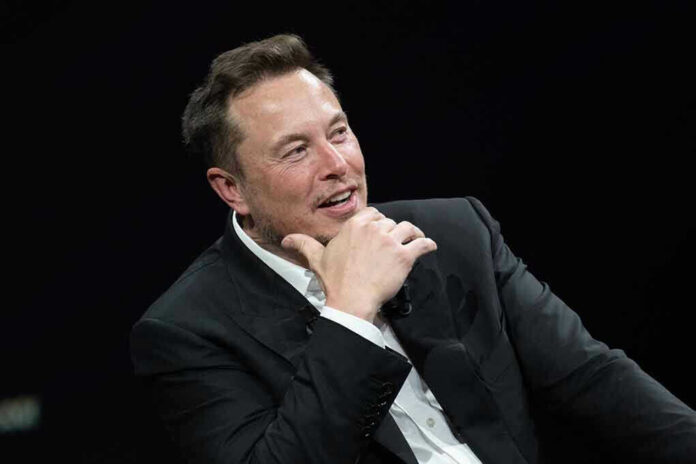
Elon Musk is threatening defamation lawsuits after Rep. Ro Khanna claimed his USAID cuts “possibly sentenced to death” 4.5 million children.
Story Snapshot
- Musk says he briefed President Trump on trimming USAID and had approval [2].
- Treasury says Musk-linked staff only had read-only access to payments systems [2].
- Khanna demands investigations and cites a 4.5 million children death risk [10].
- Courts set a high bar for public-figure defamation: prove falsity and actual malice [19].
The dispute: cuts, kids, and a courtroom threat
Rep. Ro Khanna accused Elon Musk of cuts at the United States Agency for International Development that “possibly sentenced to death” 4.5 million children and called for subpoenas and probes. He repeated that Musk “needs to answer” and be investigated when Democrats regain power [10][11]. Musk fired back. He denied causing deaths, called Khanna’s claims lies, and threatened legal action. He also said he reviewed the USAID curtailment with President Trump and received a green light [2].
Treasury officials stated that people connected to Musk’s Department of Government Efficiency only had read-only access to the system that moves federal payments, and that they could not write new code. The White House also said Department of Government Efficiency could not make spending decisions. Senate leaders echoed that the group had no authority to shut down programs or override law [2]. Those points cut against any narrative that Musk alone could “stop payments.”
Authority, access, and the line between advice and control
Khanna charged that no Department of Government Efficiency personnel should access confidential data or have any ability to stop payments. He called such acts unconstitutional and said Treasury promised that Department of Government Efficiency would not control payments after public pushback [1]. That claim sits beside court fights over the group’s reach. One lawsuit by several states alleges that Musk and Department of Government Efficiency exerted sweeping, unlawful power across agencies. A federal judge let that case proceed, while dismissing President Trump as a defendant [14].
Advocacy groups also sued Musk and Department of Government Efficiency, alleging illegal control over funding, agencies, and personnel. Their filings argue the executive branch cannot hand sweeping budget influence to an outside figure without legal limits [12][13]. Another suit by privacy advocates aims to block disclosure of sensitive personnel records to Department of Government Efficiency-linked staff, framing it as outside the law’s exceptions for data sharing [15]. These cases do not prove Khanna’s death toll claim, but they show why process and authority questions remain hot.
Does Khanna’s claim cross the defamation line?
Defamation cases involving public figures face a steep hill. The plaintiff must show a false statement of fact and actual malice. That means the speaker knew it was false or recklessly ignored the truth. Political speech and hyperbole often get leeway, especially when not provably true or false. Courts also look at context, like whether a statement reads as opinion or fact [19][16]. Claims that someone “possibly sentenced to death” millions risk sounding like concrete fact, not opinion.
No so fast, Ro Khanna. You don’t get to publicly accuse Elon Musk of serious misconduct and then call for a debate when threatened with a lawsuit.
The lawsuit is the debate. Discovery is the fact-checking. Depositions are the cross-examination. And unlike cable news, everyone is… pic.twitter.com/eiVmTeKjhx
— X Ethan (@XEthan_Carter) June 23, 2026
American conservative values stress evidence, due process, and limits on executive power. On evidence, Treasury’s read-only statement undercuts the idea that Musk’s team could flip a switch and halt payments [2]. On due process, investigations should weigh actual budget orders, who signed them, and what authority they used. On limits, if courts find the executive tried to bypass appointments and spending rules, they should rein it in. But charging a private citizen with killing millions demands proof, not a podcast clip.
What matters next: paper trails and precision
Congress will want the memos: who ordered specific USAID pauses, under what statute, and with which safeguards. Payment logs and system permissions can confirm whether any Department of Government Efficiency-linked user changed or blocked disbursements. Agency head declarations can clarify where decisions came from. If the record shows policy direction by the White House, reviewed by agencies, Musk looks like an adviser. If not, the critics’ claims gain force. Either way, rhetoric should match verifiable facts, not giant numbers without sourcing.
Sources:
[1] Web – Elon Musk Vows to Sue ‘Liar’ Democratic Lawmaker Who Suggested He …
[2] YouTube – Rep. Ro Khanna on Stopping DOGE’s “Unconstitutional” Power Grab
[10] Web – Dem Lawmaker Calls for Elon Musk to Be Probed Over 4.5 Million …
[11] Web – Elon Musk ‘needs to answer’ for 4.5 million kids ‘sentenced to death’ …
[12] Web – Ro Khanna Calls for Elon Musk to Be Probed After Midterms – Mediaite
[13] Web – CLC Sues to Stop Elon Musk and DOGE’s Lawless, Unconstitutional …
[14] Web – Campaign Legal Center Sues Elon Musk and DOGE for Exercising …
[15] Web – Judge allows 14 states’ lawsuit against Elon Musk and DOGE to proceed
[16] Web – Suing DOGE, Musk, and Trump | Stanford Law School
[19] Web – Defamation 2.0 by Cortelyou C. Kenney :: SSRN
© partiallypolitics.com 2026. All rights reserved.