The Supreme Court’s latest move left Donald Trump’s fight with E. Jean Carroll in a deeper hole than the headlines admit.
Quick Take
- A federal jury found Trump liable for sexual abuse and defamation, and awarded Carroll $5 million.[1][2]
- The district court denied Trump’s bid for a new trial or a cut in damages.[4]
- The Second Circuit upheld the verdict and rejected Trump’s legal challenge.[3]
- The Supreme Court later declined to take the appeal, which left the lower-court rulings in place.[1]
The Verdict That Set the Tone
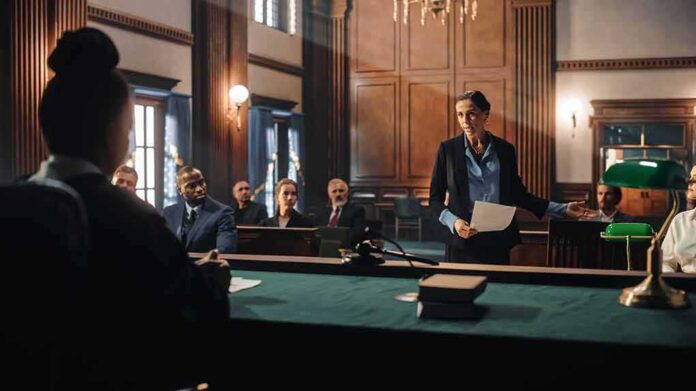
The case turned on a jury’s finding that Trump sexually abused Carroll in the mid-1990s and later defamed her in public statements. The jury said Carroll did not prove rape, but it did find a lesser sexual abuse claim and awarded damages.[2] Trump did not attend the trial or appear for the verdict, which only hardened the sense that the case would be fought more through filings than through live testimony.[1]
The district court then refused to undo the result. Judge Lewis Kaplan denied Trump’s request for a new trial or for remittitur, the legal term for cutting back a jury award, because the court saw no serious error or miscarriage of justice.[4] That matters because appellate fights often begin with the argument that a jury went too far. Here, the trial judge said the record supported the verdict, not the other way around.[4]
Why Trump’s Appeal Ran Out of Road
The Second Circuit Court of Appeals upheld the judgment and said the trial court did not abuse its discretion in key evidentiary rulings.[3] It also accepted evidence from two women who separately accused Trump of sexual assault, along with a recording from 2005, as proper under the rules that govern sexual assault cases.[3] For Trump, that left a narrow lane: attack the trial’s fairness rather than the jury’s core finding. The court did not buy it.[3]
That appellate loss mattered because it shifted the case from a factual dispute into a test of legal patience. Once a federal appeals court says the judge acted within the range of acceptable choices, the Supreme Court usually looks for a broader legal question, not just a complaint that the trial went badly. The record here gave Trump a hard climb, and the court’s refusal to hear the case confirmed how steep that climb had become.[1][3]
What the Supreme Court Refusal Really Means
The Supreme Court’s refusal to take the case did not erase Trump’s arguments, but it did leave the verdict standing. In practical terms, that is the part that matters most. A denied appeal does not decide every argument forever, but it tells the public that the lower courts’ rulings will govern this fight unless a later proceeding changes the picture.[1][9]
The Supreme Court on Monday rejected a push by President Donald Trump to throw out a jury’s finding that he sexually abused the writer E. Jean Carroll at a New York City department store in the mid-1990s and later defamed her. https://t.co/8IyYNvPehA
— Oakland Tribune (@OakTribNews) June 29, 2026
Trump’s team argued that the trial was tainted by unfair evidence and other legal errors.[5][6] That line may still work with political supporters, but the courts already rejected the version that mattered most: that the trial was so flawed it could not stand.[3][4] The result is a familiar one in high-profile cases. A party can win the news cycle for a day, yet still lose the legal war on paper.
Why This Case Keeps Drawing Attention
Carroll’s case sits at the center of a larger fight over credibility, power, and public memory. Trump denied the allegations from the start, and his supporters have tried to frame the case as proof of bias or vendetta. Carroll, meanwhile, prevailed before a jury and on appeal, which gives her claim legal weight even as the public remains sharply divided.[1][3]
The defamation side of the case also fits a broader legal pattern. Public figures face a higher bar in defamation disputes because they must show actual malice, meaning the speaker knew the statement was false or acted with reckless disregard for the truth.[18][21] That standard protects speech, but it also means these cases turn on proof, not volume. In Carroll’s case, the jury and appellate court found enough proof to leave Trump exposed.[2][3]
What Comes Next
The legal fight may still produce more filings, but the main question has already been answered by the courts that heard the evidence. Trump lost at trial, lost on appeal, and then failed to get the Supreme Court to step in.[1][3][4][9] That chain of events is why this story matters. It is not just about one verdict. It is about how hard it is to unwind a jury finding once the record starts closing around it.
Sources:
[1] Web – BREAKING: Supreme Court Rejects President Trump’s Bid to Toss E Jean …
[2] Web – Jury finds Trump liable for sexual abuse, awards accuser $5M
[3] Web – E. Jean Carroll v. Donald J. Trump – Wikipedia
[4] YouTube – Appeals court rejects Trump’s challenge of E. Jean Carroll sexual …
[5] Web – CARROLL v. TRUMP (2023) – FindLaw Caselaw
[6] Web – Carroll v. Trump, No. 23-793 (2d Cir. 2024) – Justia Law
[9] Web – Justice Department opens investigation into E. Jean Carroll … – PBS
[18] Web – Defamation – First Amendment Watch
[21] YouTube – Defamation, Disinformation, SLAPPs and Democracy
© partiallypolitics.com 2026. All rights reserved.