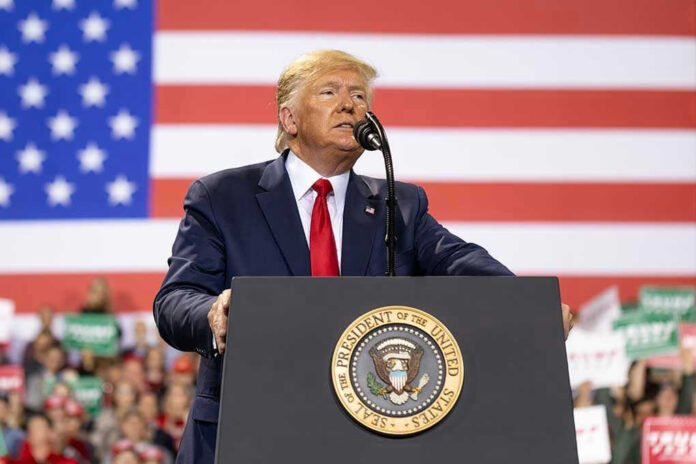
In a dramatic escalation of political tensions, President Donald Trump has demanded the arrest of Chicago Mayor Brandon Johnson and Illinois Governor JB Pritzker over their refusal to support federal intervention in Chicago.
Story Highlights
- Trump calls for the arrest of Chicago’s mayor and Illinois’ governor for their opposition to federal intervention.
- The controversy stems from Trump’s plan to deploy National Guard troops to Chicago, sparking legal battles.
- This move marks a significant clash between federal authority and local governance.
- The ongoing conflict could reshape the balance of power between states and the federal government.
Federal Intervention Sparks Legal Battle
President Trump’s recent demands for the arrest of Chicago Mayor Brandon Johnson and Illinois Governor JB Pritzker have added fuel to an already fiery debate over federal intervention in local governance. The tension began when Trump criticized Chicago’s crime rates, labeling the city a “killing field,” and suggested deploying the National Guard. This proposal was met with resistance from local and state officials, leading to a legal showdown.
On October 4, 2025, the White House directed National Guard troops to Chicago, despite opposition from city and state leaders. The move prompted a lawsuit from Illinois officials, challenging the deployment as a violation of state rights. This legal challenge underscores the ongoing battle over the extent of federal power in domestic issues, particularly in cities led by Democratic officials.
Trump’s Assertive Federal Strategy
Trump’s strategy to deploy National Guard troops to Chicago aligns with his broader agenda to assert federal authority over cities with high crime rates and significant immigrant populations. His administration’s focus on strict immigration enforcement has often clashed with sanctuary cities like Chicago. The deployment of troops is seen as a continuation of this policy, aiming to enforce federal immigration laws and reduce crime.
However, this approach has sparked fierce opposition from local leaders. Both Mayor Johnson and Governor Pritzker have criticized the deployment, arguing that it infringes on state sovereignty and could jeopardize public safety. They contend that local authorities are better equipped to handle crime and that federal intervention could escalate tensions.
Legal and Political Ramifications
The legal battle over the National Guard deployment could have far-reaching implications for state-federal relations. A court hearing is scheduled to determine the legality of the deployment, with Illinois officials arguing that it represents an overreach of executive power. The outcome of this case could set a precedent for future federal interventions in local affairs.
Politically, the conflict highlights the deepening polarization between the federal government and Democratic-led cities. Trump’s critics argue that his actions are politically motivated, aiming to undermine Democratic leaders and bolster his influence. On the other hand, Trump’s supporters view the deployments as necessary steps to restore law and order in cities with rising crime rates.
Impact on Communities and Governance
The deployment of National Guard troops to Chicago has significant implications for local communities, particularly those with large immigrant populations. Many residents fear increased militarization and heightened immigration enforcement, which could lead to profiling and discrimination. These concerns have fueled protests and heightened tensions between residents and federal authorities.
Economically, the presence of troops could disrupt local businesses and community activities, impacting the city’s economic stability. Socially, the conflict has deepened divisions among residents, with some supporting federal intervention and others opposing it. The political and social ramifications of this conflict could reshape the dynamics of state-federal relations and influence future policy decisions.