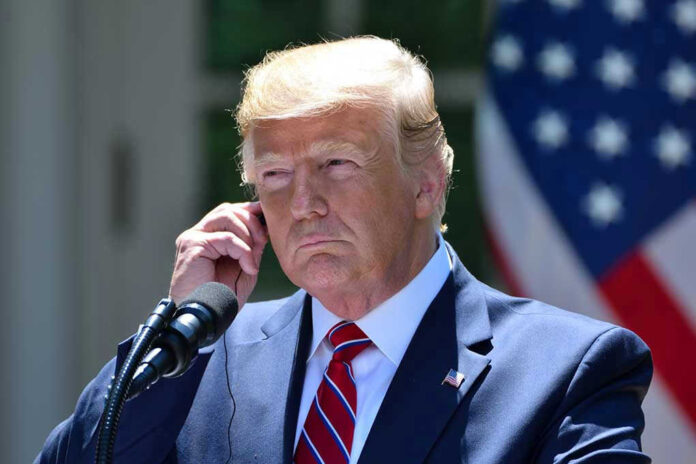
In a striking speech, President Trump equated nuclear threats to a racial slur, igniting widespread backlash and debate.
Story Highlights
- Trump made controversial “two N-words” remark at Quantico.
- The analogy conflated nuclear threats with a racial slur.
- Immediate backlash from civil rights groups and media.
- Ongoing debate on presidential rhetoric and race relations.
Trump’s Controversial Speech
President Donald Trump delivered a speech at Marine Corps Base Quantico that quickly sparked controversy. He referred to Russian nuclear threats as “the N-word,” stating, “There are two N-words, and you can’t use either of them.” This analogy equated the term “nuclear” with a well-known racial slur, drawing immediate criticism for trivializing both nuclear threats and racial issues. The setting, a military base, amplified the impact of his words.
Trump’s comments came amidst heightened tensions with Russia, particularly regarding nuclear posturing. Earlier in the year, Russian Security Council Deputy Chair Dmitry Medvedev had threatened nuclear action, which Trump referenced in his speech. This isn’t the first time Trump employed such rhetoric; he had previously used “the N-word (Nuclear!)” in a Truth Social post in June 2025, but never in such a public, official capacity.
Backlash and Criticism
The reaction to Trump’s remarks was swift and intense. Civil rights organizations, including the NAACP, condemned the analogy as “disturbing and irresponsible.” Media outlets across the spectrum analyzed the implications for nuclear diplomacy and race relations, highlighting the unprecedented nature of a sitting president making such an analogy. The discourse raised questions about the appropriateness of presidential language and its impact on societal norms.
The media’s role in amplifying the controversy cannot be overstated. Journalists scrutinized the remarks, examining their potential effects on both domestic and international fronts. National security analysts warned that this kind of rhetoric could undermine serious nuclear diplomacy and confuse both allies and adversaries about the U.S. stance on nuclear issues.
President Trump: 'There are two N words, and you can't use either of them' #Shorts https://t.co/FTptAAZk6z
— jorjan berry (@JorjanBerry) September 30, 2025
Historical Context and Rhetorical Impact
The use of the term “N-word” in American discourse is historically loaded, typically referring to a highly offensive racial slur. Trump’s rhetorical choice to link this with “nuclear” was a deliberate attempt to emphasize the gravity of nuclear threats. However, it crossed a line for many, merging unrelated sensitive topics in a way that risks trivializing both the seriousness of nuclear policy and the gravity of racial slurs.
The setting of the speech, addressing senior military leaders, highlighted the seriousness of the subject matter—U.S. nuclear capabilities and global security. The analogy was unprecedented in presidential discourse, raising concerns about the implications for nuclear policy communication and international relations.
Public and Political Reactions
Despite the backlash, Trump reiterated U.S. nuclear superiority and criticized Russian threats. His supporters may argue that his intent was to underscore the seriousness of nuclear threats. However, critics maintain that the analogy is inappropriate and harmful, both domestically and internationally. The controversy remains a hot topic of public debate, with ongoing media analysis and political commentary. As of the latest reports, Trump has not issued a formal apology or clarification.
The incident has broader implications for the political landscape. It highlights the power dynamics and relationships between key stakeholders, including Trump, the U.S. military, civil rights organizations, and the media. The controversy underscores the role of civil society and media in shaping public perception and holding leaders accountable.