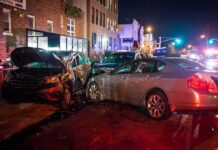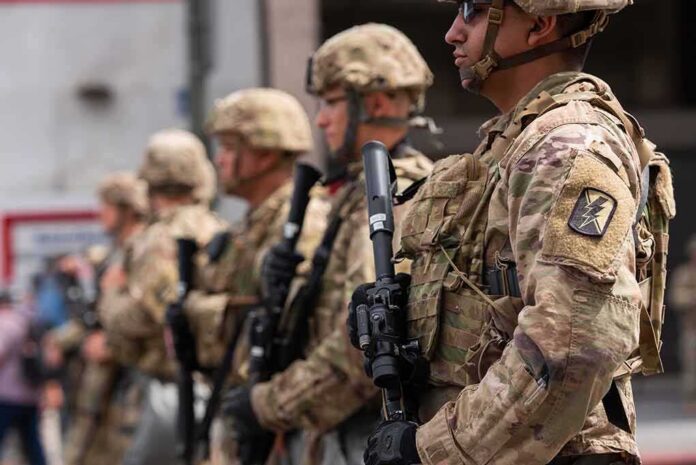
Gunfire on a lively D.C. block ended with a National Guard soldier and a suspected gunman both wounded after a street fight turned deadly serious.
Story Snapshot
- Police say a suspect opened fire during a fight; Guard members intervened and returned fire.
- The shooting happened about 11:10 p.m. Oct. 18 on the 400 block of 8th Street SE near Eastern Market.
- One Guard member was shot in the leg; the suspect was hit in the abdomen; both survived.
- Police say three Guard members discharged their weapons during the exchange.
What Police Say Happened On Barracks Row
Metropolitan Police Department Interim Chief Jeffrey Carroll said a group of National Guard members came upon a street fight and moved to stop it. He said a person involved in the fight pulled a gun and began shooting. He said the Guard members gave loud commands to drop the weapon. He said the suspect then pointed the gun toward them. Three Guard members fired their weapons in response. A Guard member and the suspect were both hit and taken to hospitals with non-life-threatening injuries.
The confrontation unfolded on 8th Street SE near restaurants, bars, and the long-running Eastern Market. Police placed the time just after 11 p.m., a busy hour on that corridor. The Guard members were in uniform and on duty in the area when they stepped in to stop the fight. The Guard member took a round to the leg. The suspect suffered an abdominal wound. Police secured the scene, recovered evidence, and called for witnesses to come forward with any video or details.
The Stakes: Order, Restraint, And The Rules That Guide Force
National Guard personnel who support local authorities operate under clear rules for the use of force. Those rules stress de-escalation, commands, and strict limits on when to fire. National Guard Bureau policy lays out how Guard units support civil authorities and follow state-level rules of force when on domestic missions. These rules aim to protect the public while allowing decisive action when someone threatens life with a weapon, as police say happened here.
Big-city corridors can flip from calm to chaos in seconds. That is why training focuses on voice commands, distance, and cover first, and only then controlled fire if a suspect points a gun. The account from police aligns with that ladder: find the fight, give commands, face a gun, and return fire. On a crowded street, every round has a cost and a risk. Clear rules and discipline reduce that risk while still stopping an immediate threat.
What We Know, What Comes Next
Police and local outlets agree on the essentials: a fight, a suspect who fired, clear commands, returned fire, two wounded, and survival for both. Reports also note that three Guard members fired, which is a specific detail that anchors the timeline and indicates coordinated action rather than a chaotic volley. Police said the Guard member’s leg injury and the suspect’s abdominal wound did not threaten life, which suggests rapid medical care and controlled fire in a tight space.
🚨BREAKING:
🇺🇸 National Guardsman and suspect both SHOT on Capitol Hill in Washington, D.C.
The shooting happened on 8th Street SE, in the Barracks Row area, with witnesses reporting multiple gunshots and a heavy police response. pic.twitter.com/mHfefkXXLR
— Q STORM 1776🇺🇸 (@Qstorm17764) October 19, 2026
The Metropolitan Police Department will process the scene, collect cameras from nearby businesses, and sort shell casings and trajectories, as is standard after any official use of force. Investigators also often review radio traffic and body-worn camera footage where available to confirm commands and timing. That process tests statements against video, audio, and physical evidence, which is routine after shootings involving public personnel.
Why This Matters To Public Safety And Common Sense
Violence near homes and shops forces a hard truth: evil does not schedule itself. When armed citizens or uniformed personnel face gunfire, the first duty is to stop the threat and protect life. That is not politics; that is common sense. The police account describes Guard members doing what most people expect of them in a crisis: step in, give clear orders, and, if a gun comes up, act fast to end the danger. The result here was two lives saved and a scene secured.
Leaders will debate deployment levels, patrol patterns, and lighting on busy corridors. Those debates have value. But the nightly test remains the same: do trained people on the street have the clarity and backing to stop violence when it breaks out? The reported actions on 8th Street SE suggest training, teamwork, and rules did their job under pressure. That is the bargain a safe city makes with its guardians, whether in blue or in uniformed service.
Sources:
taskandpurpose.com, nbcwashington.com, thehill.com, dcnewsnow.com, themirror.com, phila.gov, ngbpmc.ng.mil, cambridge.org
© partiallypolitics.com 2026. All rights reserved.