President Trump says the United States and Canada are “now very close” to sealing a trade deal, ending months of tariff threats and tense phone calls.
Quick Take
- Trump told reporters in Iowa on November 1 that the U.S. and Canada have “the concept of a very good deal.”
- The comments followed direct phone calls between Trump and Canadian Prime Minister Mark Carney.
- Reuters reports negotiators are working to ease tariffs on steel and automobiles.
- No signed agreement, timeline, or published terms have been released yet.
Trump Says Talks With Carney Produced Real Progress
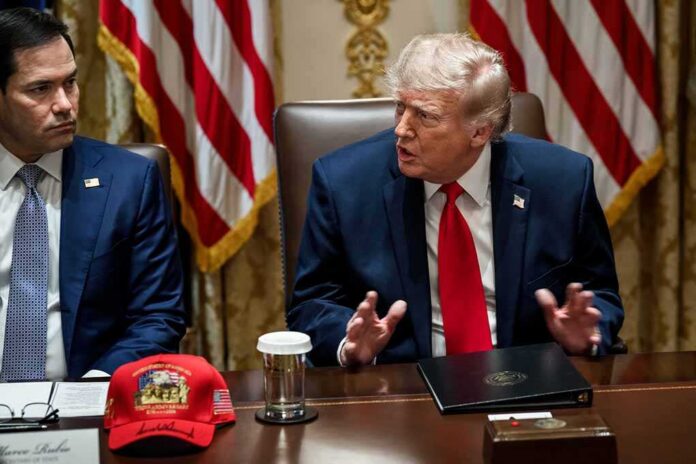
Trump spoke with reporters in Iowa on November 1 and said the two countries now have “the concept of a very good deal” with Canada. He said the arrangement would be “great for our farmers” and “great for our country.” Trump added that American farmers would pay no tariffs under the emerging terms, though he did not list which products or how the plan would work.
Trump said he had spoken with Carney “the other day” and again the following day. Carney described the conversation as good, and reporting indicated both leaders expressed interest in reaching a result that benefits both countries. The White House backed up the tone, saying the administration welcomes “continued engagement with Canada” while working toward “finalizing the details of a deal that will deliver meaningful results for the American people”.
The renewed optimism follows a summer of tougher talk. Back in August, a senior Canadian official told reporters negotiators were “very close” but still had work to do, vowing to “stay here and do the work that’s necessary”. That pattern, declared closeness followed by more weeks of talks, has defined this negotiation for months.
What Negotiators Are Actually Working On
Reuters reported on October 26 that U.S. and Canadian officials were hammering out an agreement to ease tariffs on steel and automobiles, citing six sources on both sides of the border. That reporting gives the clearest picture yet of what a deal might cover, even though Trump’s own language about farmers and the broader economy suggests the final scope could stretch further.
The talks have not been smooth. Reuters noted that American negotiators wanted more concessions from Canada, while a Canadian source said progress came because the U.S. side was moving closer to Canada’s position. Those competing accounts show real distance still exists, even as both governments talk up momentum in public.
Pressure has stayed high throughout. Reuters reported the talks were unfolding while Trump threatened a new 50% tariff on roughly $20 billion worth of Canadian goods, a reminder that the underlying dispute has not been resolved. Carney has said he had a “good conversation” with Trump about where things stand heading into the final stretch.
Why This Pattern Should Sound Familiar
American and Canadian trade fights rarely end quickly, and this one is following a well-worn script. The last major showdown, over NAFTA’s replacement, dragged through tariffs, retaliation, and years of talks before the United States-Mexico-Canada Agreement actually took effect. Trump’s team imposed steel and aluminum tariffs on Canada in 2018, Canada hit back, and the three countries kept negotiating anyway.
That earlier fight shows how these things tend to resolve. The steel and aluminum tariffs were not lifted until May 2019, clearing the way for ratification, but the full agreement still needed amendments, a congressional vote, and did not take effect until July 2020. Declarations of being “close” preceded the finish line by more than a year. The current talks may well move faster, but history says “very close” is a negotiating signal, not a finish line.
For now, the facts are straightforward. Trump and Carney have spoken directly and positively. Negotiators are working on specific tariff relief for steel and autos. The White House wants a finished deal. What remains unsettled, how big the deal is, what farmers actually get, and when any of it takes effect, is exactly what both sides say they are still hammering out.
Sources:
youtube.com, reuters.com, apnews.com, whec.com, straitstimes.com
© partiallypolitics.com 2026. All rights reserved.