One unresolved question now stands at the crossroads of constitutional order and political brinkmanship: can a government shutdown justify denying an elected representative—and an entire district—their seat at the table of American democracy?
Story Snapshot
- Arizona’s Attorney General sues the U.S. House, demanding the swearing-in of Rep.-elect Adelita Grijalva during a government shutdown.
- Speaker Mike Johnson cites procedural precedent, delaying Grijalva’s seating until the House reconvenes.
- The legal and constitutional battle spotlights the tension between House authority, representation, and partisanship.
- Arizona’s 7th Congressional District remains voiceless, setting a precedent for future crises.
Legal Showdown Over Representation in a Shutdown
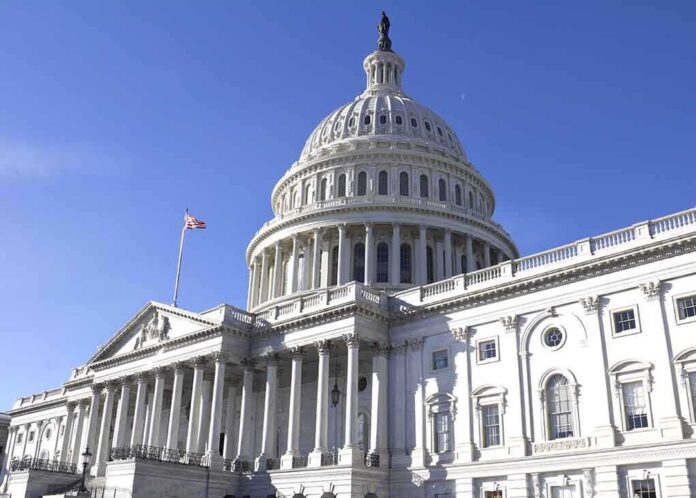
Arizona Attorney General Kris Mayes took the extraordinary step of filing a federal lawsuit against the U.S. House of Representatives and Speaker Mike Johnson on October 21, 2025, thrusting an arcane procedural debate into the national spotlight. Her demand: immediate swearing-in of Rep.-elect Adelita Grijalva, who won a special election to fill her late father’s seat in Arizona’s 7th District. The House, however, sits in recess amid a protracted government shutdown, and Johnson insists that precedent demands Grijalva wait until normal business resumes. The legal fight escalates the already bitter partisan standoff and leaves nearly 800,000 Arizonans without a voice in Congress.
Speaker Johnson’s rationale leans on a well-worn argument: House rules and historical practice require that new members be sworn in during regular session, not amid the chaos of a government standstill. He points to former Speaker Pelosi’s delays in analogous situations, framing his move as nonpartisan adherence to tradition. Yet the optics are inescapably political. With the House paralyzed, every seat holds the potential to tip votes on crucial issues—including, some allege, those as sensitive as the release of the Epstein files. Democrats and voting rights advocates see disenfranchisement; Republicans see procedural integrity and order.
Constitutional Principles Collide With Congressional Procedure
The Constitution’s mandate is clear: every district is entitled to representation. Yet the mechanics of how and when a representative takes their oath have always been subject to the House’s own rules. That authority is rarely challenged in court, with the judiciary historically averse to stepping into what it sees as legislative domain. Mayes’ lawsuit, therefore, is a gauntlet thrown at the feet of not only Speaker Johnson but the entire system of congressional self-governance. Legal scholars warn that a court order compelling the House to act would set a precedent, upending long-established boundaries between federal and state power, especially if the judiciary starts refereeing House procedures.
For Arizona’s 7th District, the stakes are immediate and personal. Constituent services languish, federal advocacy stalls, and the sense of democratic participation erodes with every day the seat remains empty. Mayes frames her case as a defense of constitutional rights, while Grijalva herself voices mounting frustration at being barred from fulfilling her mandate. The House’s refusal, Democrats argue, is not just a technicality—it’s a breach of the social contract that underpins representative government.
Political Power Plays and Precedents in the Shutdown Era
Speaker Johnson’s supporters argue that consistency in procedure is essential, especially amid the unprecedented dysfunction of a full government shutdown. They remind critics that delays in swearing in new members happened under Democratic leadership as well. Yet the timing and context matter. This impasse arises at a moment when partisan divides are at their sharpest, and the balance of power in the House is fragile. Johnson’s detractors see the move as a strategic calculation to maintain an edge in key votes, while his allies insist it’s a matter of order over chaos.
The broader implications stretch far beyond Arizona. If courts side with Mayes, future shutdowns or recesses could be punctuated by legal challenges every time a special election fills a seat. The House’s ability to police its own proceedings would be weakened, potentially inviting judicial oversight into every contested procedural question. Conversely, if the House’s autonomy holds, constituents across the country may find themselves without representation whenever political crises grind Congress to a halt. The episode exposes a constitutional gray area—one ripe for exploitation by whichever party finds it advantageous.