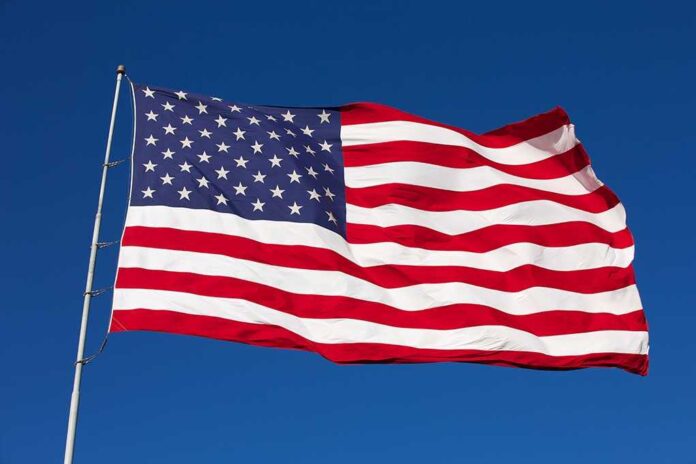
A new executive order pushes federal prosecution of flag desecration to the forefront, sparking fierce debate over the limits of free speech and the defense of American values.
Story Snapshot
- President Trump signs executive order demanding strict prosecution for flag desecration after a veteran burns the flag outside the White House.
- The order leverages existing laws and adds immigration penalties for foreign nationals, without outright criminalizing flag burning.
- Legal experts warn of constitutional challenges, citing Supreme Court precedent protecting flag burning as free speech.
- The move reignites national debate over patriotism, protest, and the role of executive power in defending American symbols.
Trump’s Executive Order Responds to Flag Burning Incident
On August 25, 2025, President Donald J. Trump signed a new executive order directing federal authorities to aggressively prosecute acts of flag desecration, particularly when those acts violate existing laws or incite violence. The order came just hours after a military veteran burned an American flag outside the White House, a move that drew widespread public protest and media attention. This action immediately reignited heated debate over the boundaries of free speech and the importance of patriotic symbolism in American society.
While the executive order does not criminalize flag burning outright—a step that would directly contradict Supreme Court rulings—it mandates that federal agencies prioritize prosecution under existing statutes, such as those addressing property destruction or incitement. The order also introduces new immigration-related penalties, instructing authorities to seek visa revocation or deportation for foreign nationals involved in acts of flag desecration. This approach is intended to deter both citizens and non-citizens from disrespecting the nation’s flag in a manner seen as provocative or lawless.
Constitutional Tensions: Free Speech Versus Patriotic Symbols
The Supreme Court has held for decades that flag burning constitutes protected free speech under the First Amendment, most notably in the landmark cases of Texas v. Johnson (1989) and United States v. Eichman (1990). Legal experts and civil liberties advocates were swift to criticize the new executive order, arguing that its aggressive enforcement stance risks violating constitutional protections and could lead to selective or politically motivated prosecutions. The administration, however, maintains that the order is consistent with the Constitution when applied to acts that cross into incitement, violence, or other illegal conduct.
Supporters of the order argue that the flag represents the nation’s unity, sacrifice, and core values, and that its desecration—especially by a military veteran at such a symbolic site—is an affront to the country and those who have defended it. Opponents counter that curbing flag protests erodes free speech rights, setting a dangerous precedent for government overreach in regulating political expression. The executive branch’s move thus spotlights the ongoing struggle over how to balance respect for national symbols with the need to preserve fundamental liberties.
Broader Implications and the Road Ahead
The Department of Justice is now reviewing pending and future cases for potential prosecution under the order. Federal agencies are preparing to enforce new immigration penalties for foreign nationals accused of flag desecration, a move that could have significant consequences for non-citizen protesters and activists. Legal scholars predict a wave of litigation, with the possibility that the Supreme Court will once again be called upon to clarify the limits of expressive conduct and executive power.
Veteran burns American flag in front of White House on day of controversial Trump executive order https://t.co/jVMQIOGBwv #FoxNews
— Charles Schmalzel (@CharlesSch69743) August 29, 2025
In the short term, the order is expected to increase prosecutions for flag desecration, intensify public debate, and potentially chill protest activity nationwide. Long-term effects could include precedent-setting court rulings and new legislative efforts to define the boundaries of patriotic expression. Veterans, immigrant communities, protesters, and law enforcement will all feel the impact as the country weighs the costs and benefits of defending national symbols through legal means. As this policy unfolds, it will test the resilience of both First Amendment protections and traditional American values.
Sources:
Fact Sheet: President Donald J. Trump Protects the American Flag from Desecration
Trump signs executive order targeting flag burning after White House protest
Executive Order on Prosecuting the Burning of the American Flag
The Supreme Court and Flag Burning: An Explainer