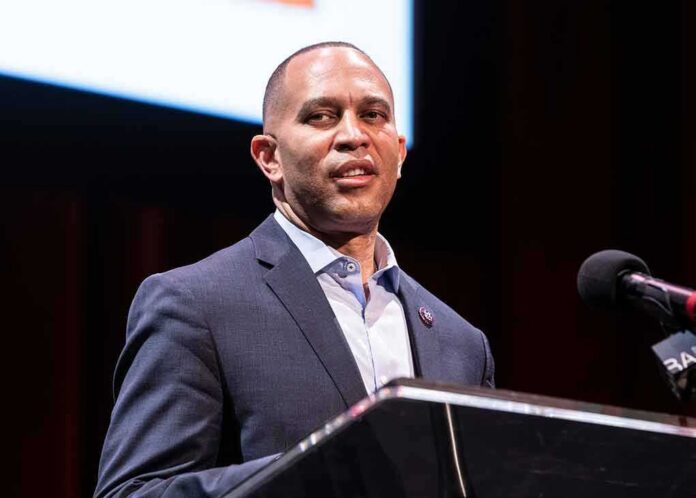
Hakeem Jeffries said every person tied to the MAGA movement should be ready to answer for “carnage.”
Story Snapshot
- Jeffries tied the MAGA movement to “carnage” and “damage” in a recorded interview.
- He said people in that movement should expect questions about causes and prevention.
- The warning arrived as Democrats prepared leadership plans and oversight priorities.
- Scholars say oversight often serves both fact-finding and political messaging.
Jeffries issues a sweeping warning on accountability
Speaker-designate Hakeem Jeffries stated that “everyone who has been part of this MAGA extremist movement” should be prepared to answer questions about “carnage and damage” to the American people. He made the remarks in an interview shared by his office on November 18, 2026, framing the push as a way to learn what happened, why it happened, and how to stop it from happening again. The phrasing placed movement identity, not just individual acts, at the center of his accountability push.
Jeffries’s choice of words—“everyone who has been part”—signaled a broad scope. The message did not specify which incidents or which people would be prioritized, or what legal standard might apply in any inquiry. It did promise scrutiny. He has paired this posture with other recent statements pressing for consequences on “wrongdoers” he says are harming the public and driving costs higher, signaling a theme of aggressive oversight and punishment for misconduct.
How Democrats could turn words into investigations
House leaders can use hearings, subpoenas, and reports to probe alleged wrongdoing and shape public debate. Research shows members of Congress often gain attention and policy traction through visible oversight, which can raise their approval with voters who want watchdogs on duty. Committee work and investigative reports also seed new bills and narratives that define fault lines for future votes and elections, a pattern documented across decades of legislative behavior.
Strategists also know that investigations can move public opinion. Studies of past inquiries show that well-timed probes can damage the standing of political opponents, especially when televised and sustained. This makes oversight both a governance tool and a political lever. It rewards clarity, repetition, and a simple story about who caused harm and who will fix it. Jeffries’s language foreshadows exactly that kind of simple, sweeping narrative.
The political gamble in blaming a movement
Movement-level blame draws sharp lines but risks backlash. When leaders assign moral fault to a broad group, they often spark a counter-mobilization that claims unfair targeting. Scholars describe these fights as “blame games,” where each side works to define who is responsible and what should happen next. Jeffries’s framing invites that fight. It tells supporters to expect action while daring opponents to defend the movement’s record instead of its most visible bad actors.
The approach also creates a proof problem for investigators. Hearings can spotlight failures and reveal facts, but linking dispersed “carnage” to a mass movement requires careful case work, not just sweeping language. Congressional oversight thrives when it connects named decisions, documents, and dollars to clear harm. It falters when it paints with a brush too wide for the evidence. The next phase will show whether Democrats can narrow focus without losing the punch of Jeffries’s claim.
What this means for Republican voters and officials
Republican officials will likely frame Jeffries’s remarks as an attack on millions of voters. That case is simple to make and easy to rally around. The conservative answer that tracks with common sense is to insist on individual accountability tied to specific acts, not guilt by association. That argument forces any inquiry to prove who did what, when, and how it harmed people. It also keeps the focus on due process instead of partisan labels.
House Speaker-designate Hakeem Jeffries issued a warning to “MAGA extremists” following his nomination Wednesday, noting those in the movement “should be prepared to answer questions” in 2027.
So… I have a question. What's a "maga extremist?" Anyone?— Liz Woods (@woodsliz58) November 19, 2026
Expect committees to become the stage for this fight. Democrats will try to show a chain from slogans and strategies to real-world damage. Republicans will demand names, dates, and receipts, and call the rest political theater. Both sides will chase viral moments. The side that wins will do three things well: define a plain villain, present plain evidence, and offer a plain fix. Jeffries has named the villain. The evidence and the fix now must follow.
Sources:
twitchy.com, jeffries.house.gov, cnn.com, financetime.org, academic.oup.com
© partiallypolitics.com 2026. All rights reserved.