
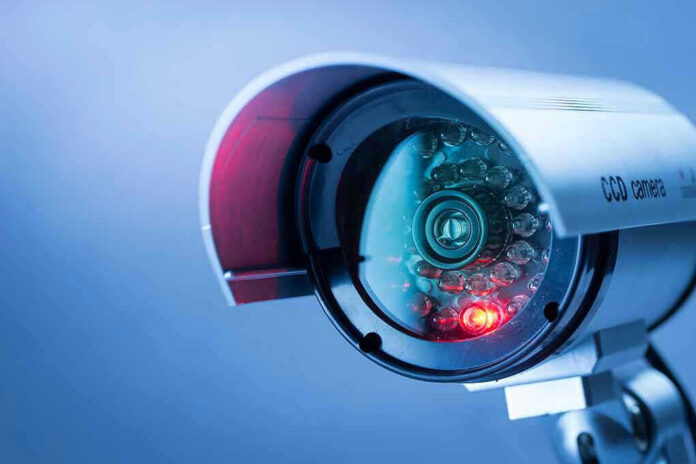
School safety tech firms are monitoring American students around the clock, even at home, exposing families to unprecedented surveillance and privacy risks.
Story Snapshot
- 86% of school safety companies monitor students 24/7—including on personal devices and beyond school hours.
- Surveillance extends into homes and private spaces, collecting messages and search histories.
- Companies conceal their methods and error rates, raising concerns over bias and overreach.
- Parents, students, and privacy advocates challenge the erosion of autonomy and constitutional rights.
Peer-Reviewed Study Reveals Scope of Student Surveillance
A UC San Diego-led study published July 8, 2025, systematically investigated the practices of 14 major school safety technology companies, finding that 86% conduct continuous surveillance of students. This monitoring is not limited to school-issued devices but also reaches personal phones and computers, capturing activity at home and in the community. The research shows these companies often gather sensitive data—private messages, search histories, and more—well beyond classroom boundaries. The opacity surrounding these practices has triggered alarm among families and privacy watchdogs, who question both the necessity and the constitutionality of such pervasive tracking.
Many school districts began contracting with these vendors in the last decade, a trend accelerated by post-pandemic remote learning and mounting pressure to prevent violence and cyberbullying. While administrators cite safety and compliance with legislative mandates—such as California’s SB 906, which requires threat reporting and school safety plans—the reality is that surveillance now reaches far into students’ private lives. Contracts often lack clear limitations, meaning monitoring can occur outside school hours and locations, sometimes without explicit parental consent or awareness. This expansion of third-party surveillance has sparked debates about the balance between safety and student rights, with critics warning of government and corporate overreach into family privacy.
Lack of Transparency and Algorithmic Risks
According to the UC San Diego study, most companies refuse to disclose details about their algorithms, error rates, or decision-making criteria. This lack of transparency raises the risk of algorithmic bias and false positives, with students potentially flagged for harmless behavior or misinterpreted communications. Researchers and privacy advocates highlight that affected students and parents have minimal recourse or input, while proprietary company systems control the flow and interpretation of data. The absence of public oversight and limited information on effectiveness or accuracy means families cannot reliably challenge or understand how surveillance impacts their children. The normalization of such monitoring threatens core American values of individual liberty and limited government, as families find themselves subject to hidden scrutiny without due process.
School boards, superintendents, and IT administrators hold the purchasing power but often lack technical expertise to evaluate these complex systems, further shifting control to vendors. State and federal policymakers have begun reviewing safety plans in light of these revelations, but meaningful regulation and oversight remain limited. Privacy advocacy groups, such as the ACLU, continue to challenge the legality of these practices, underscoring that unchecked surveillance erodes trust, chills student expression, and undermines foundational rights.
Impact on Families, Education, and Constitutional Rights
The short-term fallout includes widespread concern among families, increased scrutiny of edtech vendors, and calls for policy reforms. Students, especially those using personal devices for schoolwork, are most affected, facing the threat of over-monitoring and loss of autonomy. In the long term, researchers predict growing demand for transparency, accountability, and new regulations protecting student data privacy. The economic impact is notable, with the surveillance sector expanding rapidly and legal challenges mounting. Socially, trust between students and schools is eroding, while politically, debates intensify over the proper limits of school authority and the rights of American families.
Schools’ safety tools are spying on kids — even at home https://t.co/hiYweKdC9y
— ConservativeLibrarian (@ConserLibrarian) August 25, 2025
Expert opinions are divided: proponents argue that constant monitoring is essential for safety and early intervention, while critics point to privacy violations, lack of informed consent, and disproportionate targeting of marginalized students. The UC San Diego study, published in a reputable journal, provides credible, peer-reviewed evidence that the current system lacks necessary transparency and oversight. As districts review policies and advocacy groups mobilize, the challenge remains to uphold constitutional liberties and family values in the face of expanding surveillance.
Sources:
School Safety – San Diego County Office of Education
UC San Diego Study Finds School-Based Online Surveillance Companies Monitor Students 24/7