President Trump’s unprecedented federal takeover of D.C.’s police force—and the deployment of National Guard troops—has ignited a fierce clash over local autonomy and constitutional boundaries, leaving residents and lawmakers on edge about the future of law enforcement in the nation’s capital.
Story Snapshot
- President Trump invoked federal powers to seize control of the D.C. police, citing a public safety emergency.
- The National Guard was mobilized alongside police, resulting in 23 arrests during coordinated crime sweeps.
- Local officials and residents face diminished authority as federal command supersedes D.C. home rule.
- The move sparks renewed debate over constitutional rights, statehood, and the limits of government overreach.
Trump Invokes Federal Authority: A First in D.C. Policing
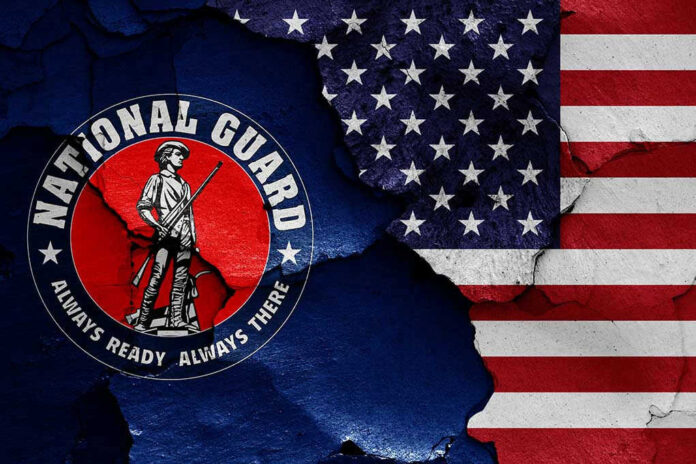
On August 11, 2025, President Donald Trump declared a crime emergency in Washington, D.C., invoking Section 740 of the District of Columbia Home Rule Act to place the Metropolitan Police Department (MPD) under direct federal control. The White House argued this extraordinary measure was necessary to address a purported surge in violent crime, threatening both public safety and federal institutions. Simultaneously, National Guard units mobilized from the D.C. Armory, marking the first large-scale deployment in response to street crime rather than civil unrest or ceremonial events.
Federal intervention in D.C. policing carries deep historical and legal significance. The Home Rule Act of 1973 granted D.C. limited self-governance, yet Congress and the President retained sweeping powers. While federal oversight has occurred during major emergencies, never before has Section 740 been used to wrest day-to-day control of the local police. This step triggered immediate protests from Mayor Muriel Bowser and MPD Chief Pamela Smith, who publicly decried the takeover as “unsettling and unprecedented,” and renewed calls for D.C. statehood and local accountability.
Crime Surge Claims and Statistical Disputes
The Trump administration justified its intervention by citing a spike in violent crime as a direct threat to both citizens and federal operations. However, recent MPD statistics indicate that D.C.’s violent crime rates have actually declined over the past two years, raising questions about the accuracy of federal claims and the true necessity of the emergency order. This discrepancy has fueled controversy, as critics accuse the administration of political theater and overreach, while supporters argue that only strong action can restore safety and order.
In the days following the executive order, law enforcement arrested 23 suspects in coordinated sweeps, with the National Guard providing logistical and security support. The rapid escalation in federal presence on city streets led to heightened tensions among residents, business owners, and community leaders, many of whom voiced concerns about civil liberties, constitutional rights, and the precedent set for federal intervention in local affairs.
Constitutional Concerns and the Battle for Local Autonomy
Legal experts and political scientists have underscored the rarity and seriousness of invoking federal control over local law enforcement. Section 740 of the Home Rule Act empowers the President to act in emergencies but offers few constraints on what qualifies as a threat. This ambiguity leaves D.C. vulnerable to further federal encroachment—raising alarms about the erosion of local self-government, the future of D.C. statehood, and the potential for similar interventions nationwide.
Supporters of the Trump administration, including some constitutional conservatives, maintain that restoring law and order in the capital is a legitimate exercise of federal authority, especially when local leaders are seen as ineffective. However, others warn that such actions, if unchecked, threaten to undermine foundational American principles of local governance, individual liberty, and constitutional balance.
National Guard troops spotted in Washington DC as Trump launches crackdown on street crime, with 23 arrests in first day. https://t.co/To6aV0xFOy
— BeeLady🐝 (@miamivandynyu) August 13, 2025
The broader implications are profound. In the short term, D.C. faces increased federal oversight, potential protests, and operational changes in policing strategy. In the long term, the move may establish a powerful precedent for direct federal control over local law enforcement—potentially affecting cities and states nationwide, and intensifying debates over constitutional limits, government overreach, and the balance between security and liberty.