The most unsettling twist in the Trump-era border saga is not that families were separated once, but that some children were torn from their parents twice, even after a court settlement that was supposed to end the practice.
Story Snapshot
- Associated Press investigators found children separated again from the same parents despite a settlement meant to keep them together[1][3].
- A federal class-action case and settlement were designed to reunite thousands of families and prevent repeat separations[3].
- Rights groups now argue that re-separations and cutbacks in legal help keep the original harm alive for years[2][4].
- The Department of Homeland Security insists it complies with court orders, highlighting a sharp clash of narratives[1].
How the original family separation policy primed the system for repeat harm
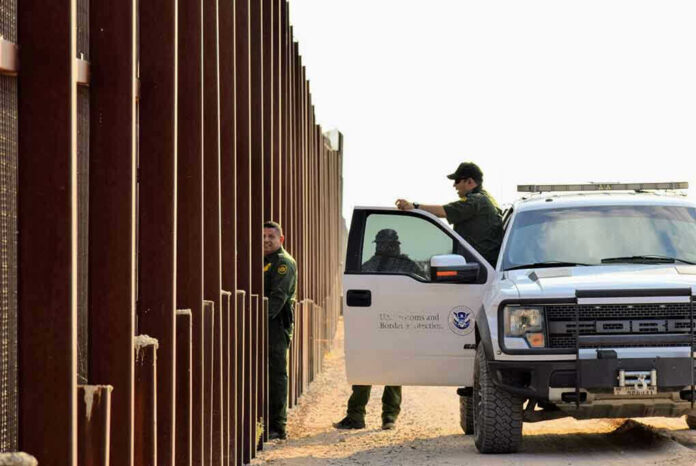
The starting point is the “zero tolerance” strategy that the first Trump administration used at the southern border. Under that policy, officials prosecuted virtually all adults who crossed the border illegally, which meant parents were taken into criminal custody and children were treated as if they had arrived alone[3][6]. Government data now show more than 4,600 children were separated between 2017 and 2021, with hundreds of parents deported without their kids and no effective reunification plan in place[2][3]. That chaos created fragile reunions held together by court orders rather than reliable systems.
As litigation mounted, the American Civil Liberties Union brought a class-action case, Ms. L v. Immigration and Customs Enforcement, that forced the government to identify separated families and reunite them on a court-ordered timeline[3]. A federal judge issued a national injunction against the practice and later a settlement set rules to protect class members from further trauma[3][4]. On paper, that should have closed the door on casual family separation as an enforcement tactic. In reality, the underlying machinery—detention, deportation, rushed screenings—remained largely intact.
What the Associated Press uncovered about second-time separations
An Associated Press investigation reported that the government later re-separated “dozens of children” from the same parents they had been ordered to reunite with[1]. Reporters described cases where families who had finally been brought back together under the settlement were split again when parents were detained for months in immigration facilities or removed to their home countries[1]. For the children involved, this was not a policy debate; it was a second round of abrupt loss after they had been told the nightmare was over.
The Department of Homeland Security responded to the Associated Press by saying it complies with all court orders and blamed non-governmental organizations and what it called activist judges for complicating enforcement[1]. That line reflects a familiar conservative complaint about judicial overreach, but it does not answer the narrow question the investigation raised: how children who were explicitly covered by a reunification settlement ended up separated again. If compliance is real, there should be clear, case-specific justifications that withstand legal scrutiny.
Legal settlements, enforcement discretion, and the gray zone
Trump’s executive order that purported to end family separation left wide room for enforcement discretion by tying reunification to what the law permits and to available resources[6]. That language preserved the government’s ability to detain parents, deport them, or claim logistical barriers when keeping families together was inconvenient. The Ms. L settlement tried to fence in that discretion by defining who qualified as a class member and what protections they received[3][4]. But any settlement is only as strong as the agencies’ willingness to honor its spirit rather than search for loopholes.
Advocates now argue that repeat separations and the threat of renewed enforcement violate both the letter and the spirit of that settlement. The Acacia Center for Justice and partners say the Trump administration targeted the same families again by moving to terminate legal services that help them navigate immigration proceedings and protect against renewed separation[4]. They warn that cutting off legal access for traumatized parents and children makes them easier to detain, deport, or split up again, turning what was supposed to be relief into another round of vulnerability[4]. From a common-sense, rule-of-law perspective, undermining the tools that let people assert their court-recognized rights looks less like neutral enforcement and more like tilting the field.
Conservative values, accountability, and what “never again” should mean
American conservative ideals emphasize limited government, family integrity, and respect for court orders. The record on family separation cuts directly across those values. Government documents and later research show that officials intentionally used family separation as a deterrent, and that in some cases they refused for days or weeks to tell parents where their children were, behavior human rights groups say meets the definition of enforced disappearance and may amount to torture[2]. A government that can hide your child from you is not limited; it is unaccountable.
Trump Administration Separates Dozens Of Children From Parents, AP Finds — The AP reports federal agents separated dozens of children from their parents again, including cases at Miami International Airport. The findings renew scrutiny of the administration’s immigration…
— BizToc (@biztoc) June 4, 2026
Experts estimate that as many as 1,360 separated children have still not been reunited with their parents years later, nearly 30 percent of those separated during the first Trump administration[2]. That unresolved damage is the backdrop for the Associated Press finding that some families who beat the odds and were reunited faced separation again[1]. When the same families sit in the government’s crosshairs twice—through repeat separations or removal of legal support—the pattern looks less like isolated error and more like a structural decision to prioritize deterrence over family unity[2][4][5]. A serious, conservative approach would demand transparent case files, enforceable safeguards, and real consequences for any official who treats a court settlement as a suggestion rather than a binding limit.
Sources:
[1] YouTube – Trump administration separated dozens of children from their parents …
[2] Web – Trump administration family separation policy – Wikipedia
[3] Web – Trump administration family separation policy – EBSCO
[4] Web – Trump’s Family Separation Crisis | American Civil Liberties Union
[5] Web – A Look Back at the Family Separation Policy
[6] YouTube – How a Trump-era policy that separated thousands of …
© partiallypolitics.com 2026. All rights reserved.