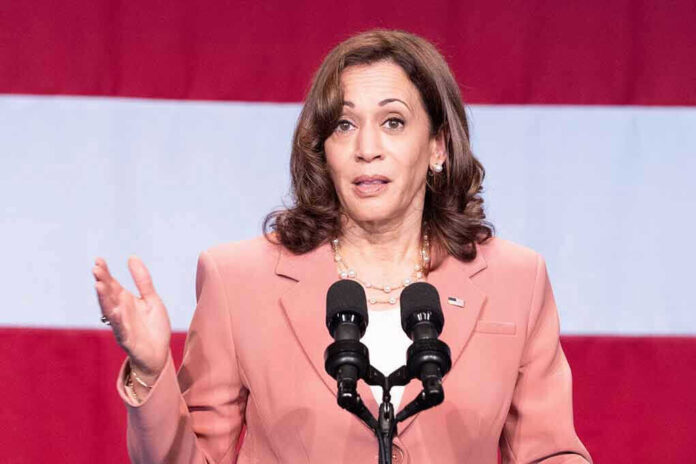
President Trump’s unprecedented revocation of Kamala Harris’ Secret Service protection before her extended coverage expired has ignited a political firestorm and forced local California agencies to fill a security gap amid rising tensions.
Story Snapshot
- Trump revoked Harris’ Secret Service protection before the extension expired, leaving her security in state and local hands
- The decision came without public explanation, during a period of heightened political polarization and public events for Harris
- California officials, including Governor Newsom and Mayor Bass, condemned the move as potentially retaliatory and dangerous
- This action sets a new precedent for the politicization of security arrangements for former top officials
Trump’s Decision to End Extended Secret Service Protection
President Donald Trump signed a memorandum, rescinding former Vice President Kamala Harris’ Secret Service protection effective September 1, several months before her Biden-authorized extension was set to expire. The move came without public reasoning from the White House or the Department of Homeland Security. Historically, former vice presidents receive six months of protection after leaving office, with extensions rarely granted except in cases of ongoing threat or high-profile public activity. Biden had previously extended Harris’ coverage by a year, citing security concerns linked to her continued public appearances. The abrupt federal withdrawal left her exposed as she prepared for a public book tour and various speaking events.
In the wake of Trump’s decision, the Los Angeles Police Department’s Metropolitan Division and the California Highway Patrol assumed responsibility for Harris’ security. This shift required approval from California Governor Gavin Newsom and logistical coordination with local law enforcement. The change took effect immediately, with California state agencies rapidly deploying resources to fill the gap. This unprecedented intervention by state and city agencies underscored the urgency of the situation and the lack of federal coordination or explanation. Harris’ spokesperson confirmed that no justification was provided by the Trump administration, further fueling speculation regarding the political motivations behind the revocation.
Political Fallout and Accusations of Retaliation
California’s political leadership responded forcefully to the White House’s move. Los Angeles Mayor Karen Bass publicly denounced the revocation as “another act of revenge,” warning that it posed a direct threat to Harris’ safety. Governor Newsom’s office echoed these concerns, characterizing the decision as “erratic, vindictive,” and driven by political animus rather than security protocol. Both officials argued that the safety of former top officeholders should remain above partisan disputes, especially amid ongoing protests and federal interventions in Los Angeles. The event further heightened already tense relations between the Trump administration and California’s leadership, with state and local officials accusing the White House of politicizing personal security and abandoning established norms of nonpartisan protection.
Despite the criticism, Trump administration officials maintained that the revocation aligned with standard protection timelines and executive prerogative. They cited the statutory six-month protection period for former vice presidents, noting that extensions are discretionary and not guaranteed. Supporters argue that the move was consistent with efforts to rein in federal expenditures and limit what they see as unnecessary privileges for high-profile political adversaries. However, critics warn that this precedent could discourage former officials from participating in public life after leaving office, particularly if security considerations become subject to political whims.
Security Implications and Precedent for Future Protection
The impact of Trump’s decision reaches beyond Harris and her immediate security concerns. The abrupt withdrawal of federal protection forced state and local agencies to divert resources, increasing operational burdens and costs for already stretched departments. The LAPD and California Highway Patrol, tasked with providing close protection for Harris, faced logistical challenges and union backlash over the use of elite officers for political figures. Legal and security experts caution that the politicization of security arrangements carries significant risks, potentially undermining both public trust and the safety of individuals who remain in the public eye after leaving federal office. While no law was broken, the lack of public explanation and the timing of the action in relation to Harris’ public schedule have led to calls for legislative review and greater transparency in future decisions.
LAPD ends Kamala Harris security after union backlash over elite officer use: report https://t.co/NFT7qz9AOd
— Fox News Politics (@foxnewspolitics) September 8, 2025
Harris still remains under state and local protection, with no indication that the federal government plans to reinstate Secret Service coverage. The broader political community continues to debate the wisdom and precedent of the Trump administration’s action, with some conservative voices praising the assertion of executive authority and fiscal restraint, while others warn of the dangers in politicizing security for former officials. The event stands as a stark example of how executive power can intersect with personal safety, public resources, and the enduring values of nonpartisan protection for those who have served at the highest levels of American government.
Sources:
Elite California unit steps up after Kamala Harris’ Secret Service detail times out
Harris’ Secret Service protection revoked by Trump, California steps in