Federal prosecutors call it an Antifa conspiracy, activists call it political repression — and outside a St. Paul courthouse, that clash just exploded into the open.
Story Snapshot
- Fifteen alleged Minneapolis Antifa militants now face a sweeping eight-count federal indictment tied to anti-immigration protests.
- Protesters and federal marshals clashed outside the St. Paul courthouse, with chemical spray used as tensions spiked during the first hearings.
- The Department of Justice (DOJ) says this was not speech but organized force against immigration agents, backed by encrypted chats and surveillance claims.
- Defense lawyers and activists insist the case is political, pointing to earlier, related protest charges that collapsed for lack of evidence.
How a protest movement turned into a federal conspiracy case
The Justice Department did not file a simple disorderly conduct case. It unveiled an eight-count indictment charging 15 members and associates of Direct Action Minnesota, a group that officials say has ties to Antifa, with conspiracy to impede or injure a federal officer, interstate stalking, interstate threats, solicitation to commit a violent crime, assault on a federal officer, and destruction of government property.[1] Federal prosecutors say these people crossed a clear line: from protest to planned force against U.S. immigration agents during Operation Metro Surge, a crackdown on immigration enforcement around Minneapolis.[3]
Officials say this was not a one-day blowup but a months-long campaign. The indictment focuses on coordinated actions in January and March, when Direct Action Minnesota allegedly organized “hard” and “soft” blockades at the Whipple Federal Building, which houses Immigration and Customs Enforcement (ICE).[3] Prosecutors claim members used vehicles, makeshift shields, and even blocks of ice to slow or trap federal convoys, flip a trailer, and physically resist officers trying to make arrests.[3] In their telling, this was strategy, not chaos.
Inside the government’s story: chats, guns, and stalking claims
The government wants the public to see a covert network, not a ragtag street protest. Reporting on the indictment says agents leaned on encrypted messaging logs and private meeting conversations to map out how Direct Action Minnesota allegedly planned blockades and tracked officers.[3] One Instagram video tied to defendant Kyle Wagner reportedly declared, “No, not talking about peaceful protests anymore… Get your guns and stop these people,” which prosecutors treat as solicitation of violent action, not overheated rhetoric.[3] That kind of quote will matter to any jury that still believes words have meaning.
Prosecutors also raise the stakes with stalking allegations. They say some defendants followed immigration officers from federal property in Minnesota across state lines into Wisconsin, took note of vehicles, and monitored agents’ movements as part of “commuting tactics.”[3] In plain English, that means tracking officers to where they live and drive. From a common-sense, conservative view, that crosses a bright red line: you can oppose policy, but you do not hunt down the people sworn to enforce the law. If the evidence is solid, those facts will trouble anyone who cares about basic order.
Chaos on the courthouse steps and a split-screen narrative
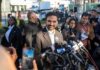
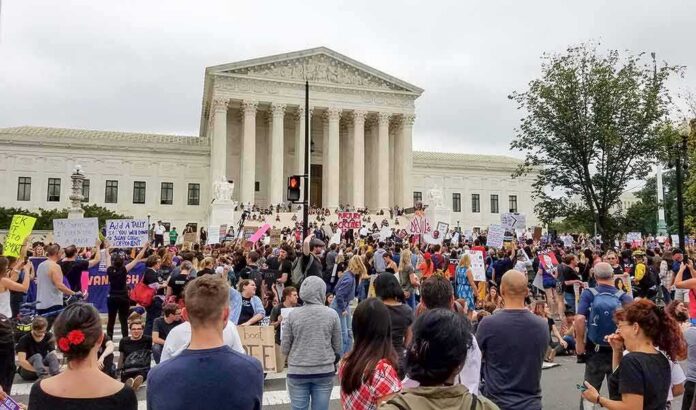
While lawyers argued inside the St. Paul federal courthouse, a different battle broke out on the sidewalk. Demonstrators rallied against the indictment, chanting, waving signs, and pressing close to the building’s entrance as defendants made their first appearances. Coverage shows clashes with federal marshals, who deployed chemical spray when the crowd pushed toward a restricted area, triggering the “all hell breaks loose” headlines conservative media quickly amplified.[9] For many viewers, those images will merge with the government’s core story: Antifa, federal building, violence, repeat.
WATCH: The sole broadcast network evening news report on the Minneapolis Antifa indictments was aired on @CBSEveningNews– a tiny brief.
TONY DOKOUPIL: We turn now to Minnesota, where federal prosecutors have charged 15 people but with not just protesting ICE earlier this year… pic.twitter.com/swAXFhZMS0
— Jorge Bonilla (@BonillaJL) June 17, 2026
Yet the judge’s decisions inside that same courthouse tell a more careful story. Prosecutors asked to detain at least some defendants. The court declined, finding no clear evidence of flight risk or likely interference with the case, and instead set release conditions, including limits on discussing the case with co-defendants and a ban on certain protest activity on federal property while proceedings continue.[9] That is how the system should work: even in a hot political case, liberty first, so long as people show up and do not tamper with justice.
Defense pushback, dropped cases, and the bigger protest crackdown trend
Defense lawyers and activists say this is not about safety but about punishing dissent. Attorney Bruce Nestor points to earlier Operation Metro Surge protest cases that were dropped, some amid claims of false information and misconduct, as proof that federal authorities have stretched facts before when dealing with anti-ICE activists.[8] From that side’s view, the new indictment looks like the government reloading after embarrassment, not calmly enforcing the law. They frame Direct Action Minnesota as a protective force for schools and neighborhoods, not a terror cell.
That political frame lands in a wider national pattern. After the 2020 protest wave, lawmakers across the country pushed scores of new measures increasing penalties for blocking roads, expanding “riot” laws, and even offering legal protection to drivers who hit protesters under some conditions.[15][18] Legal scholars have tracked a steady rise in aggressive protest policing and criminal charges that lean on conspiracy, domestic terrorism, or racketeering theories, especially when demonstrations target police or federal power.[16] Conservatives who value order should also care about precision. Crushing rioters is one thing; blurring the line so far that any hard-edged protest looks like terrorism is another.
What this clash reveals about law, politics, and common sense
The St. Paul scene shows two truths at once, and they both matter. First, if even half the government’s specific claims hold up — deliberate vehicle blockades, assaults on officers, stalking across state lines — those acts should be punished, because a republic cannot function if mobs can physically veto law enforcement.[1][3] Second, early-stage indictments are not proof. Prior collapsed cases around ICE protests in Minnesota show that agencies can overreach, misjudge evidence, or lean on ideology instead of facts.[8] Respecting the rule of law means demanding both strong enforcement and honest, testable proof.
Sources:
[1] Web – All Hell Breaks Loose Outside Federal Courthouse in St. Paul After …
[3] Web – 15 in Minneapolis facing charges for anti-ICE actions, feds …
[8] YouTube – Federal charges against anti-ICE demonstrators spark …
[9] Web – 15 members and associates of Direct Action Minnesota …
[15] Web – DOJ charges 30 more people in Minnesota anti-ICE church protest
[16] Web – As anti-ICE protest cases falter, prosecutors notch first conviction …
[18] Web – US Protest Law Tracker – ICNL
© partiallypolitics.com 2026. All rights reserved.