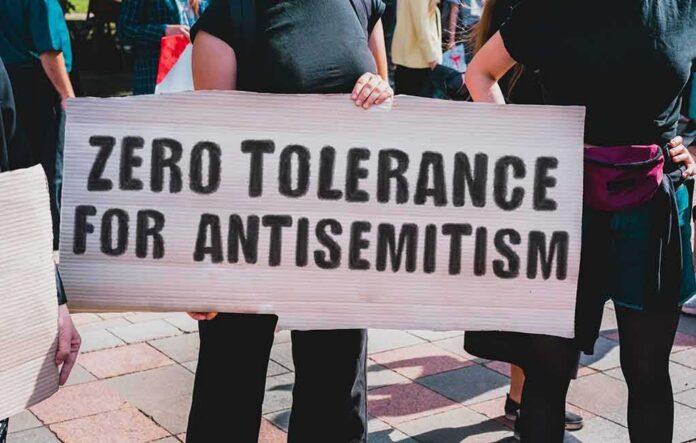
A bike protest in Philadelphia planned to ride past Jewish-owned restaurants one day before the anniversary of Kristallnacht, the night Nazi mobs smashed Jewish shops across Germany in 1938.
Quick Take
- A group called Philly Bike On Your Left organized a “Boycott Ride” set for November 8, 2026, in Rittenhouse Square.
- Flyers and social posts reportedly called the targets “Zionist establishments” that “must go” and described owners as “disgusting humans.”
- Named targets included Dizengoff, Goldie, K’Far Cafe, Huda, Schlessinger’s Deli, and Mac Mart, several linked to chef Michael Solomonov.
- Four major Jewish groups, Pennsylvania’s attorney general, and Governor Josh Shapiro’s office condemned the event as antisemitic intimidation.
- Philadelphia police said they were prioritizing safety amid statewide and local backlash.
What Organizers Planned And When
Philly Bike On Your Left scheduled the ride for 11:30 a.m. on November 8, 2026, teaming up with Boycott CookNSolo and Philly Solidarity Calendar. Another report named Philly Writers Against the War on Gaza as a partner group. The route ran through Rittenhouse Square, a dense restaurant corridor in Center City. The date placed the event on the eve of Kristallnacht’s anniversary, observed every November 9 and 10.
Event flyers reportedly declared “these Zionist establishments must go,” naming specific restaurants organizers wanted shut down or driven out of the neighborhood. A promotional post attributed to the organizing group on Instagram went further, telling followers to show “these zio business owners” that participants “see them for the disgusting humans they are”. That language moved the campaign from policy criticism into personal insult aimed at business owners themselves.
Who Landed On The List And Why It Matters
The businesses named in reporting included Dizengoff, Goldie, K’Far Cafe, Huda, Schlessinger’s Deli, and Mac Mart. Three of those restaurants serve Israeli-style food tied to chef-restaurateur Michael Solomonov. No published organizer statement explains how each business was chosen or what evidence tied them to Israeli government policy. The selection appears based on perceived Jewish or Israeli identity rather than any documented business conduct.
That gap matters. A boycott aimed at a specific policy usually points to a specific act, a donation, a contract, a public statement. Here, the public record shows names and slurs, not a stated case against each shop. When the only visible criterion is who owns the restaurant, the action looks less like political consumerism and more like ethnic targeting dressed up in protest language.
Jewish Groups And State Officials Push Back Hard
Four organizations, the Anti-Defamation League’s Philadelphia office, the American Jewish Committee’s Philadelphia and Southern New Jersey chapter, the Jewish Federation of Greater Philadelphia, and StandWithUs, issued a joint statement calling the campaign “Jew-hatred, plain and simple”. They said marking businesses for removal attempts to “intimidate, marginalize and exclude” Jews from the city’s economic life.
Pennsylvania Attorney General Dave Sunday said targeting businesses because their owners are Jewish “falls back on some of the oldest antisemitic tropes and tactics in history,” and called the Kristallnacht timing “unsettling”. Governor Shapiro’s office called the ride “blatant antisemitism designed to intimidate and drive Jewish businesses out of our communities”. Philadelphia’s Human Relations Commission director said the city would not let “bigotry, violence and hate” push businesses out.
Police Response And Community Counter-Action
Fox 29 reported Philadelphia police were prioritizing safety for the targeted businesses amid statewide condemnation. The joint Jewish statement specifically asked police to protect business owners, employees, and customers during the event. Separately, members of the Jewish community organized a food crawl supporting the targeted restaurants, turning what organizers framed as a boycott into a visible show of customer loyalty instead.
In response to this Sunday’s planned boycott of Jewish owned eateries in Philadelphia, StopAntisemitism is proud to join local groups in a food crawl to support the targeted businesses.
Starting at 11:30am, meet at HUDA in Rittenhouse Square and proceed from there.
Bon Appetit! https://t.co/6JdXKQtLAP pic.twitter.com/ochrDG3je5
— StopAntisemitism (@StopAntisemites) November 5, 2026
Boycotts are a normal part of American political life, and courts have long protected the right to organize them. But researchers who study consumer activism note that boycotts typically target documented corporate conduct, not an owner’s religion or ethnicity. Scheduling this one for the eve of Kristallnacht, while using slurs against “zio” owners, tells skeptical Americans exactly how this campaign will be read, regardless of what organizers intended to say about Israeli government policy.
Sources:
townhall.com, jns.org, members.jpost.com, fox29.com, nypost.com, jewishinsider.com, jewishchronicle.timesofisrael.com, clevelandjewishnews.com, wfmd.com
© partiallypolitics.com 2026. All rights reserved.