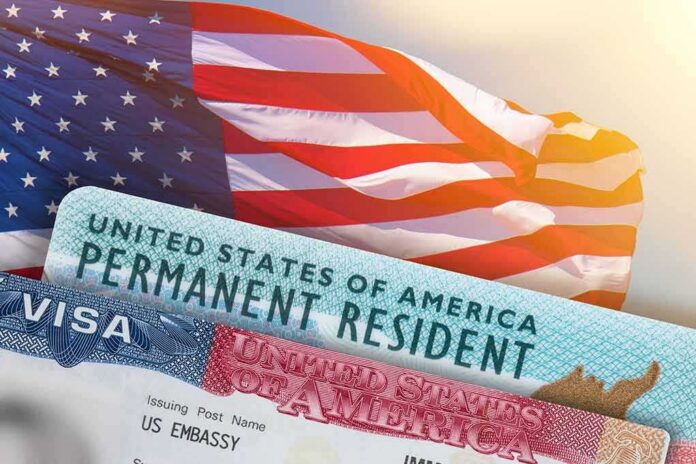
Texas is about to reopen a door Greg Abbott locked shut, and thousands of foreign tech workers at public universities are watching closely.
Story Snapshot
- Governor-elect Gina Hinojosa says she will undo Abbott’s freeze on new H-1B visa petitions at Texas state agencies and public universities.
- Abbott’s January 27, 2026 order blocked covered agencies and schools from filing new H-1B petitions without Texas Workforce Commission approval through May 31, 2027.
- Abbott said the freeze targeted abuse, including employers who fired American workers and replaced them with cheaper H-1B hires.
- Hinojosa says the restriction keeps schools and agencies from filling real staffing gaps, even as she acknowledges the program has problems.
What Abbott’s Freeze Actually Did
Abbott’s letter to agency heads did not touch every Texas employer. It applied narrowly to state agencies run by gubernatorial appointees and to public colleges and universities. Those institutions could not file new H-1B petitions without written permission from the Texas Workforce Commission, a restriction set to run until May 31, 2027. Private businesses across Texas faced no such limit.
Why Abbott Pulled The Trigger
Abbott framed the move as a response to documented abuse. He pointed to employers who skipped good-faith efforts to hire qualified American workers before turning to foreign labor, and to cases where companies fired U.S. employees and replaced them with H-1B workers at lower pay. His bottom line was simple: taxpayer-funded jobs should go to Texans first, and government should set that example itself.
Abbott went further on public schools specifically, saying he saw no obvious need for H-1B employees in Texas classrooms, though he left room for exceptions if an institution could show a truly unique skill gap. He also ordered agencies and universities to report back on how many H-1B workers they already employed and how many petitions they filed in 2025, building a paper trail before any further hiring could resume.
The restriction was never a blanket ban on foreign workers in Texas. It was a pause button aimed squarely at public institutions, paired with an investigation into how the program had been used, and it preserved a path for exceptions when agencies could justify the need.
Hinojosa’s Case For Reversal
Hinojosa, set to become Texas’s first Democratic governor since the 1990s, told reporters she plans to scrap the freeze once in office. Her argument centers on staffing shortages at public universities and agencies that she says the freeze makes worse, not better, by blocking recruitment of specialized workers those institutions say they need.
She has paired the H-1B reversal with another campaign promise, undoing Abbott’s ban on selling hemp-derived THC products to anyone under 21. Notably, Hinojosa has not disputed that the program has been abused. Her position instead is that oversight and targeted enforcement, not a broad freeze, should handle bad actors while letting legitimate hiring continue.
The Research Behind The Rhetoric
Academic studies on H-1B labor effects cut in different directions, and that split matters for judging both sides fairly. Research using H-1B lottery data has found that losing visa slots actually lowered employment and wage growth for native-born workers in the same field, suggesting complementary rather than competing labor. A Census Bureau working paper similarly found no clear evidence that H-1B hiring displaces native-born, college-educated workers at the firm level.
Other economists tell a different story. A Congressional Research Service review of recent quasi-experimental studies found that winning an additional H-1B petition corresponded to a decline of roughly 1.5 other jobs on average. Harvard economist George Borjas, using census data from 2012 to 2024, linked skilled immigration programs including H-1B to lower wages for American graduates in science and engineering fields, with effects as steep as 16 percent in computing and engineering roles. Neither body of research settles the debate, which is exactly why Abbott’s demand for an investigation before resuming unrestricted hiring was a reasonable, conservative instinct rather than an overreach.
What Comes Next For Texas Workers
The freeze expires on its own in May 2027 regardless of who sits in the governor’s office, so Hinojosa’s promised reversal would move that timeline up, not invent a new policy from scratch. Agencies still seeking exceptions under the current rule must get Texas Workforce Commission sign-off first, meaning the practical rollback depends heavily on how fast her administration moves once she takes office.
I wonder what the Texas teachers who supported Gina Hinojosa think about her position on H-1B Visas? https://t.co/eYP2CsYl0D
— Christin Bentley (@Bentley4Texas) November 21, 2026
Texans should watch whether Hinojosa pairs her reversal with any of the oversight tools Abbott built into his original order, like the reporting requirements on current H-1B usage. Scrapping the freeze without keeping that transparency would hand bad actors exactly the cover Abbott set out to remove, and voters who backed Hinojosa as a jobs-focused centrist deserve to know which parts of the policy survive the swap.
Sources:
facebook.com, gov.texas.gov, hindustantimes.com, texastribune.org, newsweek.com, news.bloomberglaw.com, globalmigration.ucdavis.edu, nber.org
© partiallypolitics.com 2026. All rights reserved.